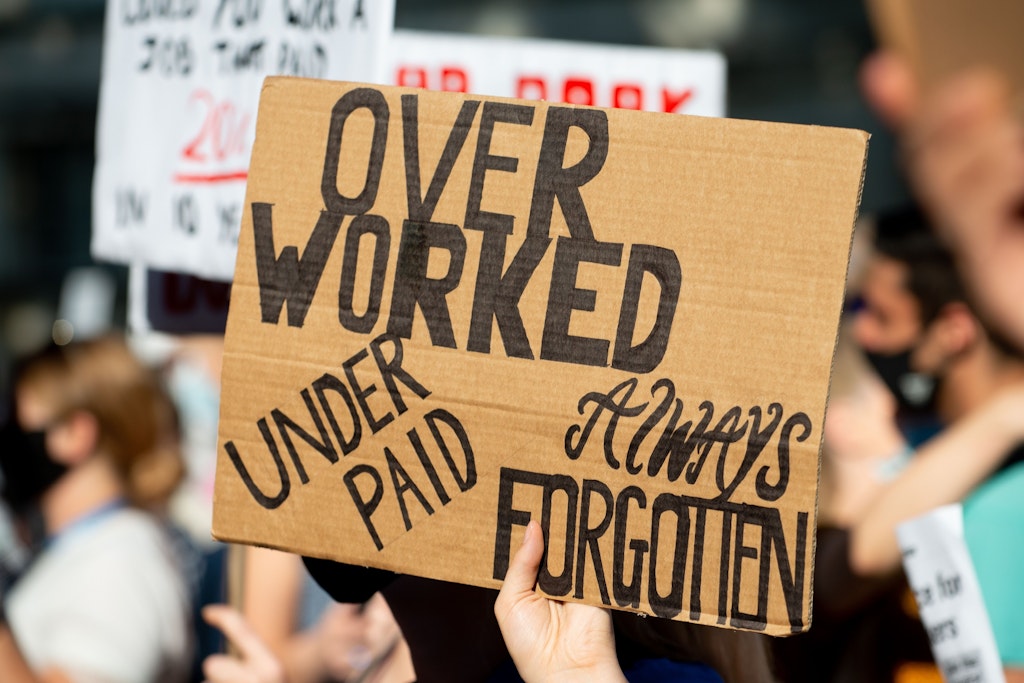
The Fair Work Commission (FWC) finalised its decision on Stage 3 of the Aged Care Work Value Case, rewarding direct care workers with pay rises of up to 28% while only committing to a maximum 7% increase for indirect care workers.
Key points
- Roughly 320,000 direct care aged care workers received an interim 15% pay rise last June, with the Federal Government fully funding the boost to the Aged Care Award
- Most indirect aged care workers (kitchen, laundry, admin, maintenance, etc) were left out of the decision, leaving more than 100,000 aged care workers without a well-deserved pay increase
- In its latest assessment, the FWC said minimum award rates have been impacted by historic gender underevaluation and there was scope to increase them substantially beyond the interim 15% rate
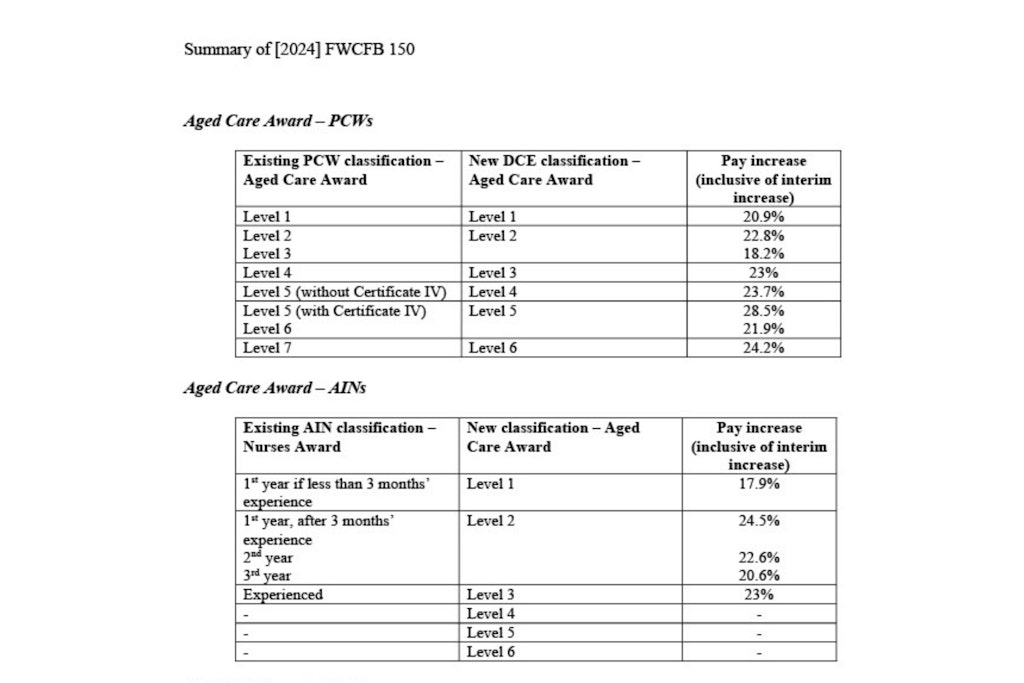
- Due to differences in the work value of staff, a single integrated classification structure in the Aged Care Award is not possible and the FWC has updated the classifications, awarding an average 23% pay rise
- The Expert Panel also said indirect care workers do not perform work of equivalent value to direct care workers, with a 3% Award increase deemed appropriate
Indirect workers left behind
In a bitter blow for aged care workers classified as ‘indirect’ by the FWC – including those in the General and administrative services’ stream or the ‘food services’ stream – have not been supported with an Award increase similar to their colleagues.
“Without diminishing the importance of the work of indirect care for the proper functioning of residential aged care facilities, the Expert Panel concludes that the above workers do not perform work of equivalent value to direct care workers justifying equal rates of pay,” the decision summary stated.
However, they did identify critical tasks such as infection prevention and control measures, dementia care and training requirements as reasons to constitute a 3% pay rise for indirect workers.
Additionally, they announced:
- Healthcare workers (HCWs) covered by the Social, Community, Home Care and Disability Services Industry Award (SCHADS) Award who perform non-personal care work will be covered by the general wage applicable to personal care HCWs
- Laundry hands, cleaners and food service assistants who interact with residents more than other indirect care employees will be moved from Level 2 to Level 3 in the Aged Care classification structure for indirect care employees and will receive a total 6.96% pay increase
Direct care increase offers a meaningful boost
Health Services Union, which lodged the case in November 2020 and initially called for a 25% wage increase, said the full and comprehensive pay rise for the entire sector was the right outcome.
“Aged care workers are the undervalued, under-appreciated lifeblood of the care economy. The women of this sector have been overlooked for too long,” Gerard Hayes, HSU National President, said.
“Aged care workers perform physically and emotionally demanding work with our community’s most vulnerable members. All they have asked for is a proper wage that recognises their skills and dedication.”
Friday’s decision, however, presents a mixed bag of results. Rather than passing on a full 25% Award increase, the FWC Expert Panel determined a benchmark rate for a key classification and a new and uniform classification structure based on that benchmark rate was best.
A weekly rate of $1223.90 for Certificate III qualified employees is the new benchmark rate for personal care workers (PCWs), Assistants In Nursing (AINs) and HCWs. A separate benchmark rate for 4-year degree qualified Registered Nurses (RNs) and Enrolled Nurses (ENs) was proposed but will be settled under the ANMF’s Nurses Award Work Value Case.
As a result, direct care workers will receive varying pay increase amounts, with the average sitting at 23% – still a very strong result. For example:
- A current Level 4 PCW will move to Level 3 and receive a 23% increase
- A third-year AIN will move to Level 2 and receive a 20.6% increase
- HCWs on the SCHADS Award on Level 4 (Pay Point 2) with a Certificate IV will move to Level 5 and receive a 19.4% increase
No date has been revealed regarding the implementation of the Award increases, while the Government has not commented on fully funding the additional wages. They have until April 12 to file a submission regarding both matters.
The full summary of changes, and reasoning, can be found on the Fair Work Commission’s website.


