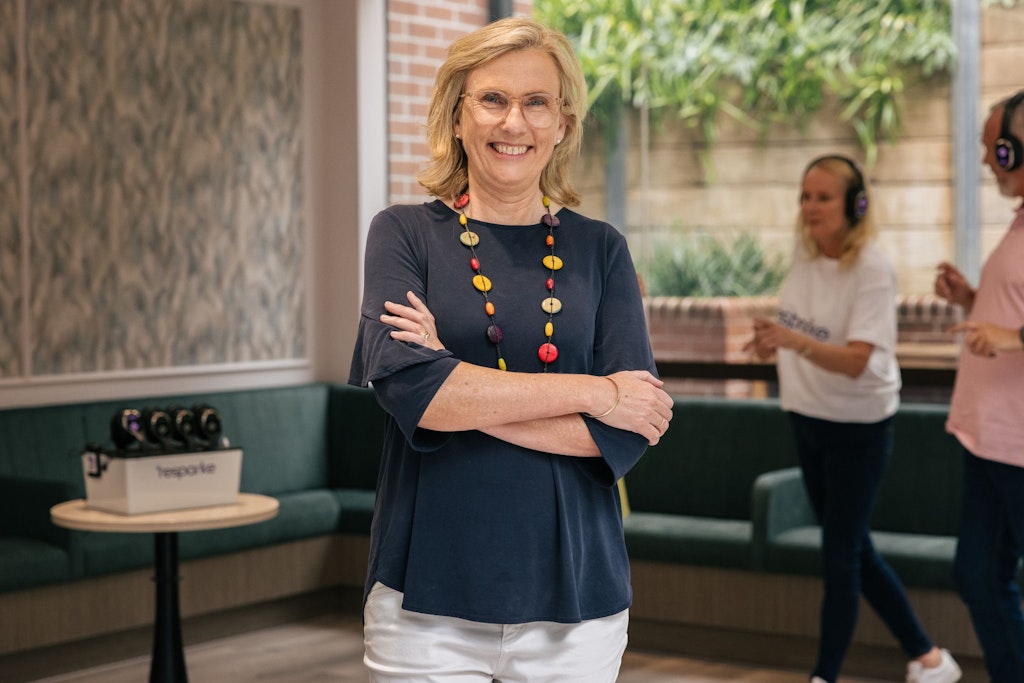
Australia’s own Alison Harrington, Chief Executive Officer (CEO) and Founder of Resparke – an evidence-based dementia care technology that incorporates music, videos and podcasts – has been selected as one of 33 women globally to receive the prestigious Cartier Women’s Initiative Fellowship in 2024.
Key points
- The Cartier Women’s Initiative is an annual international entrepreneurship program that aims to drive change by empowering women impact entrepreneurs
- Ms Harrington is one of three award recipients under Cartier’s regional Oceania award; first place awardees receive USD $100,000 in grant funding while second receives $60,000 and third $30,000
- Her organisation, Resparke, is an evidence-based technology that provides personalised music, videos, and experiences to enhance their well-being and create moments of joy and meaningful connections for people with dementia
Resparke formed out of Ms Harrington’s recognition that music – through silent disco technology – could spark cognitive engagement and enjoyment from people with a dementia diagnosis.
Following a successful trial period, Resparke has been launched in several aged care homes and has reached more than 25,000 dementia patients. Those patients, their carers and their families can all be involved in the experience as the music playlists can be linked to personal stories, significant influences and family life.
“It’s about transforming seniors’ wellbeing, about connecting to memories and building beautiful bonds between people. The Resparke name is about that instant spark in somebody’s eyes when they put the headphones on,” Ms Harrington said.
Results from Resparke’s trials show that residents’ moods improved by nearly 80% on the Cornell Depression Scale (CDS) while psychotropic drug use dropped by 12%. Staff even reported an 80% increase in their job satisfaction while using the technology.
After achieving early success with the technology, the Cartier Women’s Initiative will provide financial, social, and human capital and support to grow businesses and build leadership skills.
By leveraging this opportunity, Ms Harrington aims to expand the impact of Resparke’s therapeutic dementia care and wellbeing technology from 25,000 to 500,000 seniors living with cognitive impairment in aged care and home care by 2027.
“The Cartier Women’s Initiative provides fellows with access to an incredible global network of human capital and financial support,” she added.
“At a time when the aged care sector is under pressure and faces many challenges, I look forward to using this recognition and platform to significantly expand the reach of the Resparke technology to ease the burden on staff and create even more positive outcomes for residents and families across Australia.”
Ms Harrington’s final placing in the Oceania category will be revealed at the Cartier Women’s Initiative Awards Ceremony on May 22nd, 2024, in Shenzhen, China.
More information on all 33 featured fellows is available on the Cartier Women’s Initiative Website.


