A comment from Todd Durrell, CEO of St Andrew’s, in a Time Well Spent podcast interview made me pause. He was asked what his message was to small, aged care providers who think they cannot survive. His answer was direct.
They can – but they cannot keep running it like it is 1985.
That line stayed with me, but I found myself thinking about 1986 instead.
I chose 1986 deliberately. It was the year I started as a chef. So, for me, this is not just a convenient date. It marks almost 40 years of watching kitchens, foodservice, hospitality models and care expectations change around us.
In that time, I have seen food trends come and go. I have seen equipment change, menus change, service models change and compliance expectations change. I have seen aged care move from institutional feeding towards resident choice, quality of life and dining experience. I have seen the rise of food safety systems, the introduction of International Dysphagia Diet Standardisation Initiative (IDDSI), the growth of texture-modified meal innovation, the increasing complexity of residents, and now the early influence of digital systems and artificial intelligence.
A lot has changed.
But the question that stayed with me was this: what still looks like 1986 in our aged care kitchens? Not necessarily the equipment. Not the paperwork. Not the words in our policies. Not even the menus. I’m talking about the assumptions underneath.
Because the aged care kitchen has changed. The question is whether the system around it has changed enough.
Forty years of change landed in the same kitchen
It would be unfair to suggest aged care kitchens are still operating exactly as they did in 1986 – they are not.
In the 1980s, aged care food was often shaped by institutional and hospital-style thinking. The emphasis was production, timing, portions, safety and routine. Meals needed to be served, residents needed to be fed, and kitchens needed to stay within budget.
That mattered then, and it still matters now. A kitchen that cannot safely and reliably produce meals has already failed the basics. But food in aged care is no longer only a production task.
Today, food is linked to nutrition, dignity, resident choice, cultural identity, comfort, memory, clinical risk, family expectation and daily quality of life. It’s not just what appears on the plate – it’s how the resident feels when that plate arrives, whether the meal reflects who they are, whether it meets their needs, whether it is safe, whether it is appetising, and whether the dining experience around it supports them to actually eat.
That is a very different expectation from simply getting meals out on time.
Modern equipment helped shift what kitchens could do. The combi oven, in particular, was a genuine game changer. It changed consistency, moisture retention, steaming, roasting, regeneration and production control. It allowed aged care kitchens to produce better food with more reliability and less manual strain.
But there is a hidden problem in the phrase often attached to better equipment: it allows kitchens to do more with less. And, over time, that became both a strength and a risk. The kitchen became more capable, but it also became more loaded.
Food safety became more formalised as documentation increased and audits became sharper. Vulnerable persons’ food safety requirements brought greater accountability. Corrective actions, verification, allergen controls, food recalls, supplier substitutions and audit readiness all became part of the daily kitchen environment.
Then came increasing clinical complexity.
Residents entering aged care today often have higher care needs, more complex health conditions, greater cognitive decline, increased swallowing risks, more specialised dietary requirements and higher expectations from families. Difficulty swallowing (Dysphagia) is now experienced by more than half of our aged care residents.
The kitchen did not just cook through that change. It absorbed it.
The work changed faster than the model
There has been a clear shift from cooks to chefs beyond just a title change. It reflects a change in expectation.
The older model was often built around the daily production cycle: cook the menu, serve the portions, clean down, order stock, keep the kitchen moving… and do it all again tomorrow.
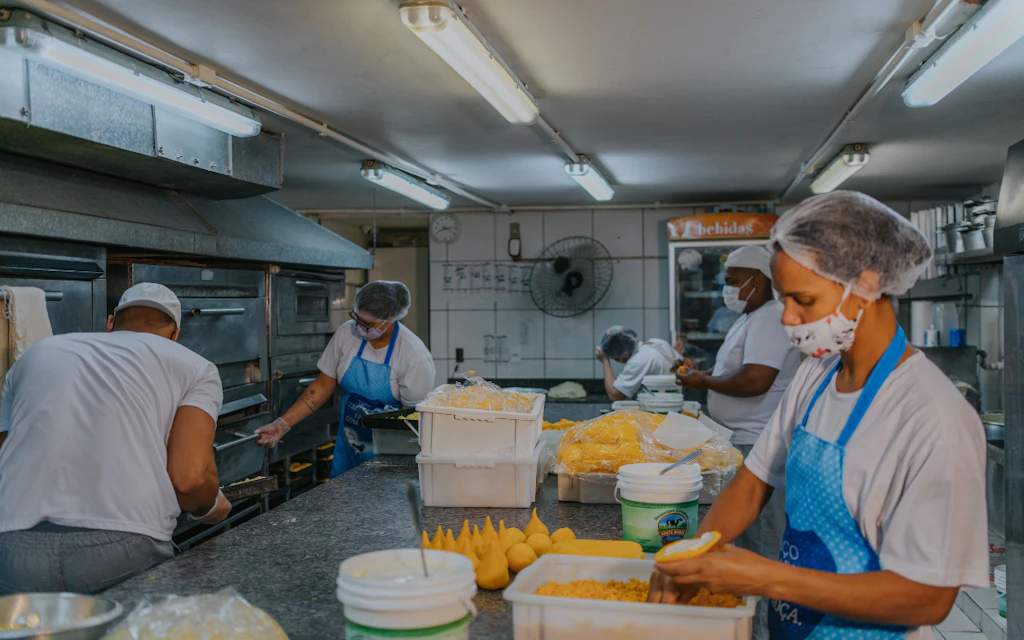
The modern aged care chef is still expected to produce safe, appealing food every day. But around that production task now sits food safety evidence, allergens, IDDSI, resident choice, nutrition risk, complaints, audits, family expectations, supplier issues, documentation, infection control expectations and the dining experience.
The work changed but the model around it often did not. Which doesn’t mean chefs are clinicians, but it does mean chefs are now working much closer to care risk than many operating models acknowledge. A wrong texture, missed allergen, outdated diet list or poor handover is not a catering inconvenience: it’s resident risk.
Food is not separate from care. It’s one of the most repeated forms of care a resident receives.
The part that still looks like 1986
Most kitchens aren’t cooking like it’s 1986. Most providers aren’t speaking about food like it’s 1986. The compliance environment is certainly not 1986.
However, the part that might still be 1986 is the underlying assumption about what the kitchen is there to do. The role expanded, but the roster, authority and recognition didn’t always expand with it.
In too many places, the kitchen is still treated as if its core purpose is to produce meals: breakfast, morning tea, lunch, afternoon tea, dinner, supper, clean down, repeat. But the modern aged care kitchen is carrying far more than the meal cycle.
In the national pulse survey I recently conducted with aged care chefs across Australia, only 14% said they consistently had enough time and staffing to produce the food they wanted to serve residents.
That number should stop us.
It’s not simply a complaint about being busy, but rather a signal that the system hasn’t caught up with the work. As an industry, we’ve become quite comfortable with adding requirements, but less confident at removing friction.
Compliance, documentation, audit readiness, Standard 6 and IDDSI have been added, while allergen management has increased. Resident choice, the dining experience, and family expectations have expanded.
But where was the redesign? Where was the serious workforce conversation? Where was the acknowledgement that aged care catering is no longer just production?
So, is it still 1986?
No. Not entirely – the kitchen has evolved, the chef has evolved, and the standards, risk and expectations have all changed. But in too many places, the operating model beneath it all hasn’t changed enough.
We’ve modernised the tools, the language, the menus and the compliance requirements. Yet we haven’t yet modernised the way we staff, govern, train, hear and support the people doing the work. And that’s the part that still looks like 1986.
Every aged care provider in Australia relies on a food system and each one of those kitchens is carrying more than it was designed to carry. But that’s not the important part – the question is what are you, as a leader, going to do about it?
If the honest answer is ‘not much’, the better question is this: what would it take to change that, and who in your organisation needs to be in that conversation? And how do we give everyone a seat at the table in 2026.


