The era of aged care consolidation is here. And while big has merit across operational efficiencies and leveraging of assets, big is ‘best’ is not unchallenged.
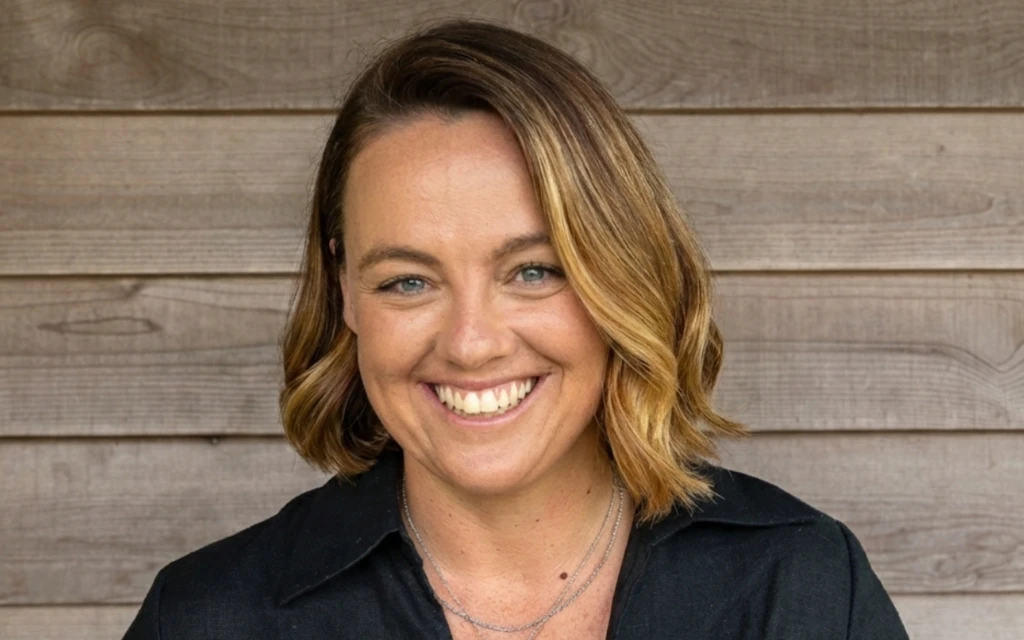
Shelly Fletcher is the Chief Growth Officer of Honey Bee homes. Through its existence, and acutely though its thriving, the home and its business-model invites a conversation about the part small-scale household care models must have in Australia’s aged care future.
As residential aged care demand rises, variety of care, particularly small scale’s offering to the market, is an opportunity Australia cannot afford to lose.
Micro scale aged care
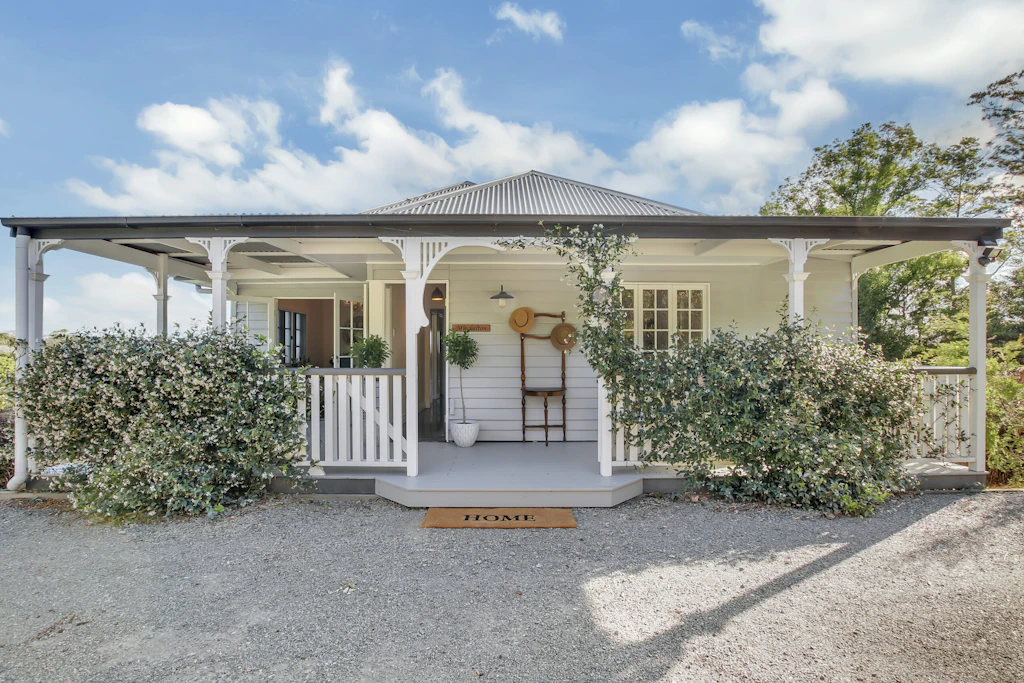
Within NSW’s northern coast is an offering of care that boldly goes against the grain. Honeybee homes is made up of three homes that were, and still based on, residential family dwellings.
Small goes further than spatial imprint. On paper, Honey Bee has a ratio of care of one to four. In reality, Fletcher shares, “it’s closer to one to three”. Honeybee is not just a small-scale household care model, with three to four residents in each home – it’s tiny.
And how is tiny going? Proof is in their 30-year waitlist; tiny has captured client attention in a mammoth way.
“The groundbreaking feedback we’ve had is that families say, ‘I didn’t know something like this existed’”.
Queen bees – female leadership in aged care
Fletcher, alongside founders Grescha Brewer and Jo Dwyer, all have years of experience in traditional aged care. Their pivot point was when obstacles faced and enduring questions turned into conviction backed and risks taken.
Micro scale aged care meant career, time and money where their heart and heads were.
“We kept bumping up against these issues, and we thought we could do it better if it was smaller and simpler”, Fletcher shares.
In a provider market where consolidation is king, queen bees set up a starkly contrasting hive. This pluck didn’t swarm out of nowhere, “the real motivation for our founders was to create an aged care for their parents, and then ultimately for themselves, and the broader community”.
“There was this constant drive of ‘we can do better’”.
“They simplified the model of care, taking it back to what does an ordinary home look like and how do we get closer to that”.
Micro models make for operational follow-through
“A lot of times in our sector, we talk about ‘our care model’, but then when we actually get into the decision-making rooms, it’s the business model that then leads these decisions.”
Fletcher details that, for Honeybee homes, their care model is, “to cook, clean, care and community”.
How this translated into management, to be viably sustained financially and operationally, was to be their proof in the pudding test.
For Dwyer, Brewer and Fletcher, the substance of their counter market punt was to be found in that care model being honoured in every and all decisions, no matter how small or seemingly banal.
Whether it’s a big decision or whether it’s just even something simple like, ‘do we introduce fake flowers or real flowers?’, all of that comes down to what’s actually our model of care.
Honey Bee’s small scale household care model means, “an infrastructure of operational decisions, all decisions, light, windows, blinds, air mattresses, all are valid and must go through our care model in decision-making in the boardroom”.
The model is only as strong as its real impact, “ensuring that the care is personalised, that we don’t make mass decisions.”
Care model results – reimaged routine
“Our mission really is to reimagine care”, Fletcher shares, “and we want more people to do what we’re doing”.
Going against the grain is only as good as sustained routine. For that litmus test, there’s no better clarity than a ‘day in the life’.
“None of us want to live in a locked ward, or drink terrible coffee”.
At Honeybee homes, Fletcher notes, “the residents set the rhythm”.
“One day last week, a gentleman didn’t get out of bed until 10am. I was actually talking to a student volunteer, I had to tell him this was unusual for traditional aged care, usually there’d be a regimented time, often early, to get him up and showered”.
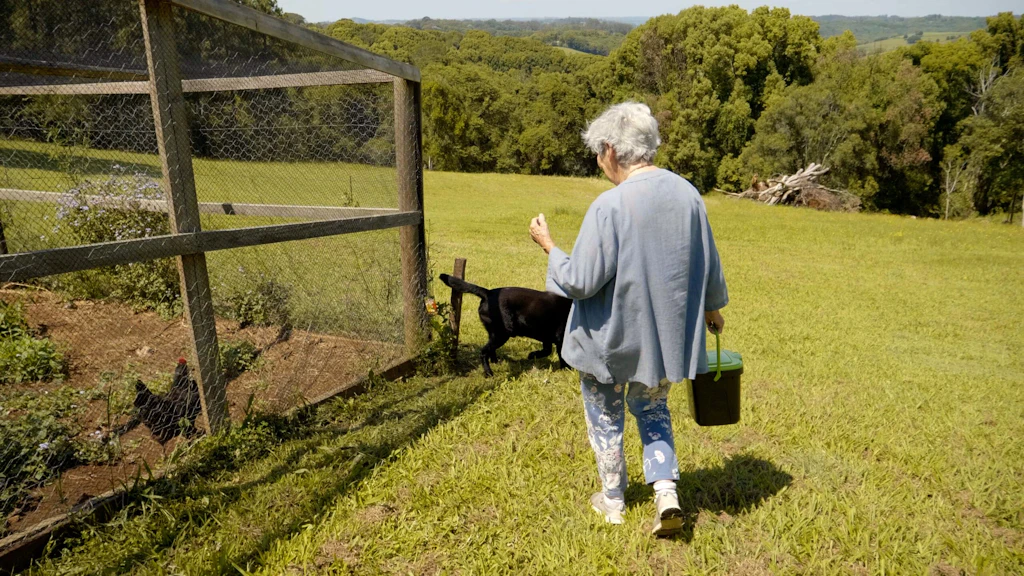
In our model of care, there was no problem for him to sleep until when he wanted to, he then got up and had a coffee from our barista level machine, had it with us on the deck. Then he went and had a shower, came back, enjoyed his puzzle. He then went for a walk around the local community, came back for lunch, and when his housemates arrived, they had a good chat about what they’d all been up to that day.
Counter-market risks and macro rewards
Divergent strategy took courage and conviction, personally and professionally, “Dwyer and Brewer, they did this because they’ve got passion, they took risks, and they backed the cause”.
“You can’t fuel reform without proof, you need people to go and showcase, prototype, that things like locked wards aren’t necessary, we keep people safe without locked wards”.
“Having a better staff ratio”, Fletcher highlights, “means that our preventable hospital admission has been 0% for five years”.
“We are contributing to an ease of pressure on state funding in multiple ways”.
Small-scale household care model – possibilities and reactions
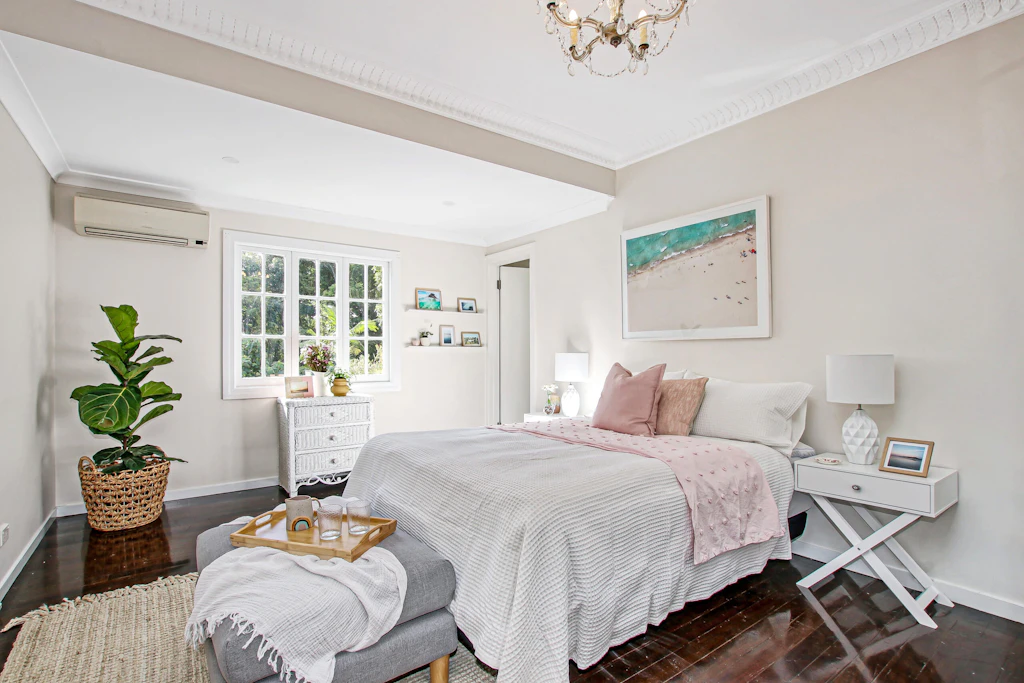
“In our model, our staff eat with residents, everyone drinks barista level coffee, the kitchen is in the home, not industrial or separate, everyone finds value in a home-cooked meal of higher quality”.
The collective, the hive, buzzes further.
“I have a whole lot of gratitude for the residents and the families who are investing in this model, because without them, we wouldn’t be able to do it.”
Fletcher speaks of the reputational reaction from people seeing the authenticity and transparency of operations, fees and care, “we charge the same amount no matter if you are well and you’re going to check the surf and you’re going to the pub, or if you’re in the final stages of your life and we’re helping you to palliate.”
“It has become a whole collective, a rhythm of founders, staff, residents, family members seeing what we’re doing”.
Future growth
Pushing what is possible is not over for the Honey Bee team, “we’re trying to set up what we’re calling metrics that matter”.
“We’re conducting research, this is our big project for the coming years. We want to work with other providers who are also doing the small-scale model to come up with what metrics actually matter in our small-scale model”.
One such metric may well be enlarging the scope of who can care.
Fletcher shares a key recent moment, “a Canadian staff member was feeling homesick, she shared that with the residents. The residents turned around and shared that with our founders, strongly insisting they hold a thanksgiving party to help the staff member out”.
Models of aged care can and should support, “deep genuine care going both ways, this is very appropriate”.
Fletcher encourages, “Honey Bee homes has shown that small-scale is viable and it benefits the aged care system to have these models”.
“The government has the opportunity at the system level to really help, to back this small-scale model.”
For Fletcher and team, the hope is that the market will yield a varied hive, “until that happens, I hope more people can be brave and passionate like Dwyer and Brewer and open up other [homes]models around small-scale”.


