
Residential aged care providers have expressed varying degrees of confidence following changes to Refundable Accommodation Deposits (RAD) guidelines allowing providers to set far higher prices without external approval.
Key points
- On January 1, the maximum accommodation payment amount that residents can be charged as a RAD without approval from IHACPA increased from $550,000 to $750,000
- The Australian Government will index this price to the Consumer Price Index annually from July 1, 2025
- Mirus Australia data reveals many providers remain uncertain about the best way to align pricing strategies with market expectations and regulatory demands
- Almost two-fifths of providers are worried they will not be able to understand and comply with new regulatory requirements
- Providers also expressed uncertainty about setting competitive pricing and forecasting market trends
Intended to give residential aged care providers more financial security, providers can now charge a maximum accommodation payment amount of up to $750,000 without seeking IHACPA approval.
This could see some providers charging more for rooms that previously had applications for a RAD amount above $550,000 denied.
Additionally, the announcement risks misleading consumers into thinking all room prices are increasing despite many providers charging higher rates.
Mirus Australia said just 9% of survey respondents are very confident that their current accommodation pricing strategy aligns with consumer expectations and market demand.
A further 42% said they are somewhat confident, while 40% remain neutral. The other 9% lack confidence entirely.
Mirus Australia Chief Executive Officer Andrew Farmer said providers face a challenging adjustment period, although he’s confident the sector can adapt.
“The aged care industry is dealing with a significant amount of change, and these survey results highlight both the challenges and opportunities ahead,” he said.
“Providers are working hard to ensure their accommodation strategies remain sustainable while meeting consumer expectations. We understand that adjusting to regulatory changes while maintaining competitive pricing and financial stability is not an easy task.
“Aged care providers have always shown resilience and adaptability. By leveraging the right strategies and insights, the sector can navigate these changes effectively and continue delivering quality care to older Australians.”
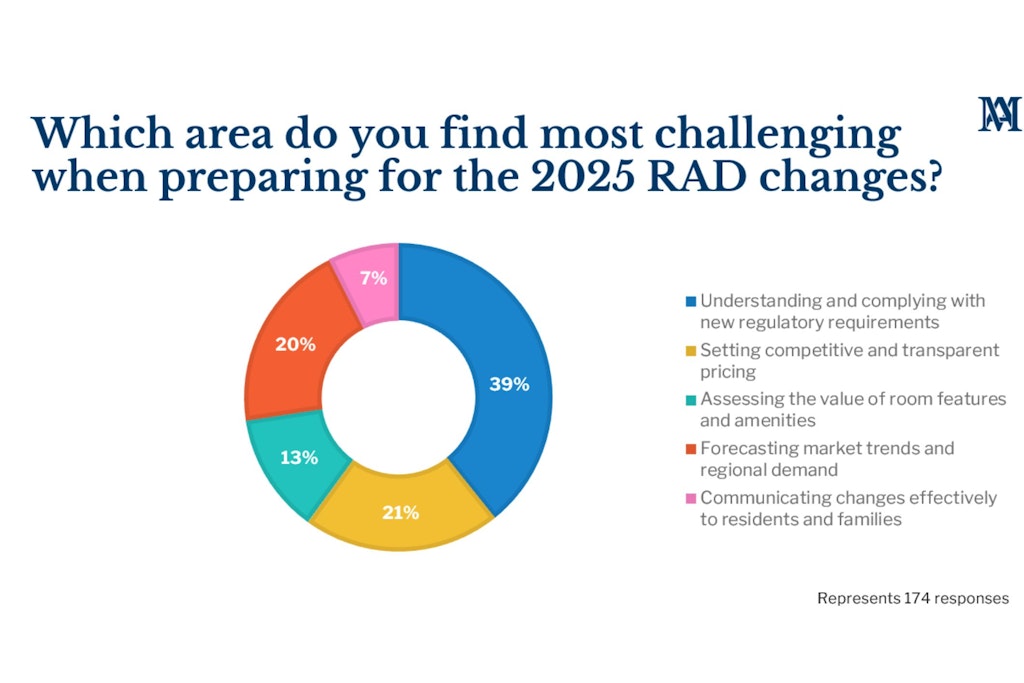
Just under 40% of providers said the most challenging area when preparing for the RAD changes is understanding and complying with the new regulatory requirements, followed by:
- Setting competitive and transparent pricing
- Forecasting market trends and regional demand
- Assessing the value of room features and amenities
- Communicating changes effectively to residents and families
Providers juggling these concerns while reviewing accommodation pricing strategies will face additional internal and external pressures.
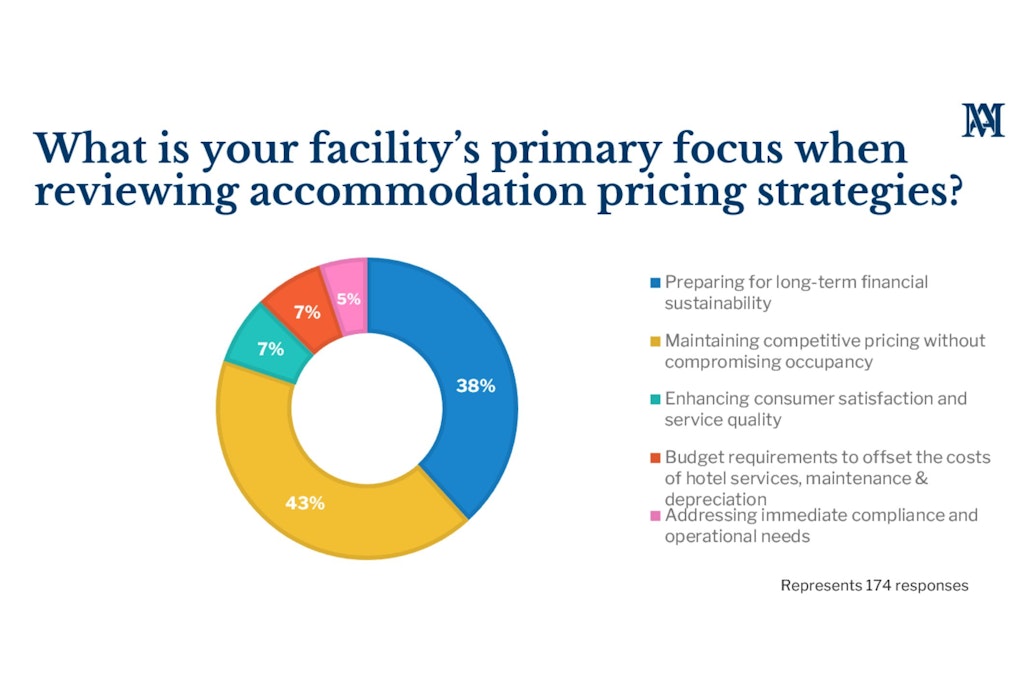
More than 40% of providers want to maintain competitive pricing without compromising occupancy – which sits at almost 94% across the sector. Meanwhile, 38% are focused on preparing for long-term financial sustainability while adjusting their pricing strategy.
Others are focused on enhancing consumer satisfaction and service quality, addressing multiple compliance and operational needs, and controlling budgets to offset other accommodation costs and depreciation.
External pressures from older people, their families and aged care advocates will be a trend to watch. Cost of living pressures mean everyone is cautious about spending and receiving value for money. Higher-than-expected accommodation prices will put older people on notice.
Meanwhile, others are wary of inflated figures, including COTA CEO Pat Sparrow who said clear rules are required to keep room prices fair.
“COTA wants changes to RADs because the numbers just don’t add up. Single aged care rooms shouldn’t cost the same as a two-bedroom house – but some providers are setting RAD prices this high,” she told Hello Leaders.
“Older Australians have consistently told us about their frustrations with the pricing system, and the disconnect between what they’re being asked to pay and the actual value of a single room.
“Adding the option to have a daily rate would be fairer than the current RAD system, and we’ll be pushing for this in the 2026 accommodation pricing review.
“While we are pleased that the new Aged Care Act will protect our most vulnerable through hardship provisions, this isn’t enough on its own. We need clear rules to keep room prices fair and in check with local property values.”
Ms Sparrow urged the sector to set prices reflecting local community real estate costs, rather than putting up pricing prioritising profit and bottom lines.
“Fair pricing isn’t just good business – it’s essential for making aged care accessible to all who need it,” she added.


