Strength from vulnerability – Arun Thomas RN shares a leadership journey built on using compassion to profoundly impact
Last updated on 16 April 2026
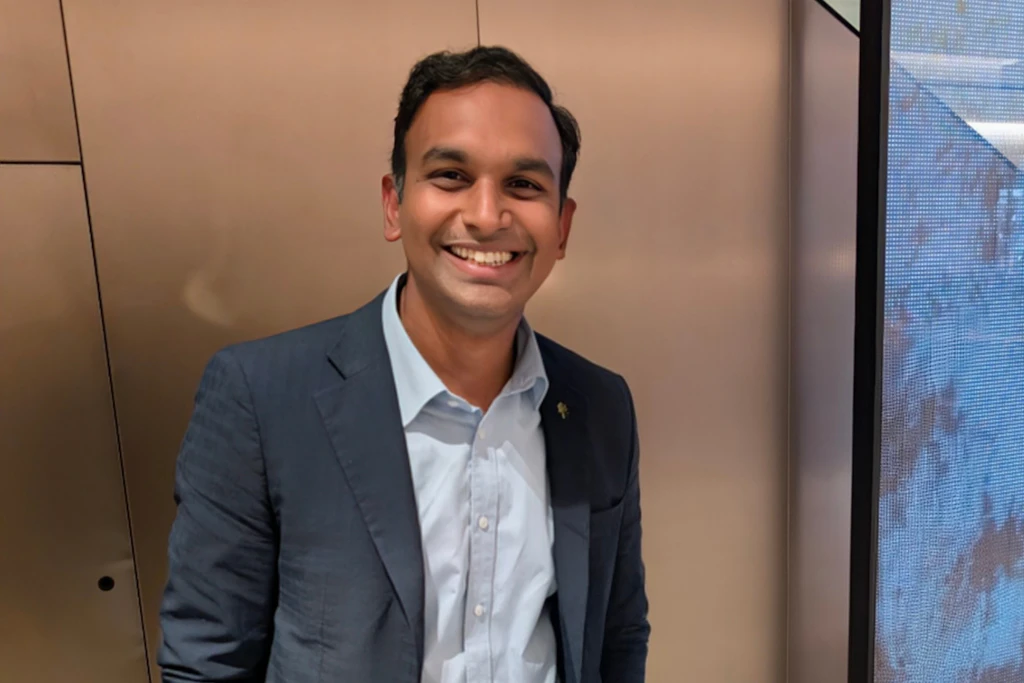
While Arun Thomas is softly spoken, he is a person listened to. Instantly coming across as thoughtful and earnest, colleagues across aged and healthcare are quick to say he is the real deal. Having recently been nominated to be a part of the Victorian government’s expanded Multicultural Health Advisory Committee, Thomas’ achievements have been well documented and warmly recognised by peers, in and out of health and aged care. But it is in delving into his journey to arrive at the considered, impactful and community-minded leader he is today that Thomas has another gift to give. From very little, because of very little, Thomas understands vulnerability, the power of the pack and the vitality of being heard and making an impact. From a lack of resources, he learned to wield much and from achieving by being lifted up by community to be a leader, he has irrevocably learnt to reach back and lend a hand to those coming up.
Pursuing different
Before the accolades and scholarships, before the boardrooms and policy-decisions, Thomas knew he had a hunger to see the world and grow while he was at it.
“Ever since I was 15 years old, I had one goal, that was to get a foreign degree, to just fly to a different country, I didn’t know what country but to get that degree.”
While he didn’t realise it at the time, this tenacity, to challenge himself with the different, to grow outside of the bubble of ‘safe’, could well have come from his grandmother.
Thomas’ eyes light up as he talks about his cherished family-member. A firecracker of a person, he says, “my grandmother, back in the day, was a trailblazer.” And blaze she did, Thomas shares, “back in 1940s India, she, as a woman, had a degree in economics.”
Not only highly unusual but an achievement with untold obstacles to be overcome, Thomas sees from his grandmother the importance of brave people going first, for others to follow.
“I still get goosebumps, and get very emotional because she’s one of the main reasons my parents felt confident to send me, the only son, who should stay with the family, overseas to get a higher education.”
Lighting the fire
Thomas shares that his father set a high bar to receive his blessing to go overseas, “he said if you achieve a mark of 90% in your final year, I’ll send you to any university in the world, I’ll fund it but that’s the mark, and no wiggle room.”
“I was a student sitting around 50%, just passing, my father basically set me up to fail in the deal”. Thomas chuckles now at where that placed him and what came next, “but basically what happened is that it lit a fire I didn’t know I had.”
“When I got my result, around 97.5%, I was flabbergasted, goosebumps again because no one, not in the remotest sense, could fathom what had just happened.”
He laughs, “my high school asked me to log on to the marks site, not once, not twice but three times to check the grade because they couldn’t, didn’t believe me.”
Treasuring the bravery of his loved-one to dare the different, with an inkling that he had a fire to meet a tall order, Thomas set off for his chosen destination, Adelaide, Australia.
Best laid plans
From a high of besting everyone’s expectations, Thomas was soon to experience the loneliness and vulnerability of being an international student on foreign shores.
From receiving, “a full scholarship with the University of South Australia to study commerce and accounting”, to that route being utterly upended, Thomas would soon have to grapple with, as he describes it, “financial survival, a constant background noise – distracting, stressful and always present.”
He arrived in Australia, a minor, with, “my professor being my local guardian for six months…I was very shy, completely new to the country, and language was a struggle.”
“I was not the person people see before them today, talking, speaking up, what I was, while it wasn’t shy, it was a distance, the language struggle meant I became more observant because of the language barrier”, Thomas shares.
“International students, migrants, due to language they may not speak as much but from my own experience I know, it means that we listen to others more.”
From being the newest trailblazer in his family, to finding the fire to fuel his work ethic, Thomas was to experience another lesson in leadership, listening. Far from the loudest and boldest person in the room, he observed and drank in what was on people’s minds, hearts, their passions, worries and fears. In a place of vulnerability, that of language struggle, he shifted to honour a resource leaders often overlook, listening to learn.
But one of his greatest struggles was yet to come. Three years and some change into a four year degree, in his final year, the Department of Immigration, “decided to remove the accounting profession from the Skilled Occupation List (SOL).”
“And just like that, there was no pathway for students like me, pouring everything they had into their studies, to get permanent residency.”
Thomas shares how he was at a cross-roads, arrived at in whip-lash speed and reeling, “I had two options, to go back home and give up on my dream, the fire I had to contribute to something great, or go into another degree that I hadn’t ever planned or considered.”
Aged care oasis
In all the language struggles, in all of the loneliness of seeking to connect with a new culture, Thomas had found a lifeline, aged care, “during my time doing a commerce degree, I was working as a part-time care worker in an aged care facility.”
“I absolutely loved working in aged care, I clutched onto this lifeline, it helped me improve my language, social skills, everything.”
Through this exposure to aged and healthcare, Thomas shares that the aged care industry provided a further lifeline, direction, “I knew it would be a secure option, to pursue a nursing degree.”
Thomas shares how he called his father to tell him of his decision, “I told him, ‘I’m planning to do a different degree, I hope for your blessing and financial backing because I would still be an international student, to pay upfront.”
“And my dad said no, he could not comprehend a male doing nursing.”
Thomas is generous and kind in sharing the pain, vulnerability and complexity that came next, “after that my parents disowned me, they did not talk to me for five years, no contact, nothing.”
Against the easy option, Thomas chose to remain, “I decided that I would stay in Australia, alone, I would make it work, because it had been my goal, to work hard and contribute something amazing to this country.”
Working from vulnerability
Thomas found himself figuring out a new nursing degree, with “zero science background”, with “no financial backing”, all in a foreign country.
He smiles with layered depth, “I have always sensed since that time, even though my grandmother passed away, I sensed that wherever I go, I have her presence very strongly with me, like she is a guiding star.”
Thomas got to work, he did a diploma of enrolled nursing in TAFE, he opted to fast-track it, going from 18 months to 12. He translated that to a 1 year credit with the University of South Australia, all the while paddling his financial boat.
And yet the challenges kept coming. Thomas brings into his current policy understanding what macro decisions at the top mean for front-line staff on the ground, “the aged care place I was working at, it was bought by another group, and they made the old staff redundant because they had their own staff they wanted to prioritise.”
“So I lost my job, and my living situation in a share-house had become financially unstable as many students had graduated and left interstate.”
Thomas shares what happens next in bold honesty, to highlight the circumstance of real people, in the real world, that health, aged care and social systems must grapple with. As a passionately hard-working student, who had poured everything he had into his work at the aged care centre, and nursing degree, “with compounding setbacks of losing my job because of a merger, and housing unaffordability, I ended up living for six months in my car, homeless.”
The power of community
Thomas shares that at this time, despite his living circumstances, spanning the summer of 2011-2012, he was working hard to do his utmost within his Bachelor of Nursing at the University of South Australia.
With his time at the aged care facility, he had sharpened his language skills and had built up a group of incredible friends. One of those friends was to land home to Thomas just how profoundly important community is, in the thick of life, on the backfoot of setbacks.
“I still remember, taking laundry to my friend’s home, and saying ‘oh my washing machine is broken’, and I didn’t know this, but he shared with me since, he got protectively suspicious of me, it took him a few times of following me, but he persisted and he found out I was living in my car.”
Thomas shares, “he was angry, he said he couldn’t have that on his watch, he took me in and helped set me up again.”
He shares this was one of the most moving and growing times of his life. He came to realise what community can do, how they are placed in proximity to see what’s going on and to do something about it. This lesson has never left him. Across all his subsequent achievements and accolades, this lesson has become a foundation of standard, goal and process. And to know just how much of a fuel purpose and giving back can be.
“Through this whole time, while I was completing my nursing degree, while I was cut-off from my family, without proper housing, what I was doing was to make the pain into purpose, to take the sadness, frustration, disappointment, anxiety, depression and make something out of it.”
Leadership from compassion
Looking back Thomas sees how his experience started to shape and deepen him as a person and leader, “during the end of my studies I started to fall into leading group studies, and it somehow grew to almost 100 students wanting to be involved.”
“My friends, fellow students, saw something in me, they said I should run in the student election for a role in the student union”. Perhaps due to a tenacious trailblazing matriarch spurring him on, likely from achieving with very little, from being encouraged at the selflessness and power of community, Thomas did his next bravest thing, “I put my hands up and ran.”
“The union hadn’t had a president who was an overseas student before, someone who looked different from the usual leaders, who was to represent the 35,000 students across the campus, that was the start of my board journey.”
Thomas cannot champion enough leaning into the opportunity to listen to the ‘fire’ in your mind, and soul, if you want to make a difference. Language, foreign-ness, setbacks, these are vulnerabilities that can shape incredible leaders that Australia and aged care desperately need, Thomas has lived this.
No age is too young, “I was a board director from 23 years old, and I got an exposure to what it is, what it should be, helping services work, providing for people with great systems, helping people.”
“Service is one of my main values. Wherever I go, whatever I’m involved in, roles or responsibilities, I always look for three things: impact, influence and value. And even if two are ticked, and one is not, I will leave that position and look for where the three align, because all three are so important.”
The substance of leadership
Thomas was off to the races, not by himself mind you, but ensuring the community came right along with him.
“While I was at the university, through the student union, I was able to bring substance to promises, providing 40 job opportunities for students at the university. The team and I were able to bring the organisation back to surplus after 20 years of deficit.”
Thomas shares that leadership is lessons learned alongside others, “there were some great achievements we were able to do as a team, and that gave me a huge confidence to continue speaking up.”
“Advocacy became a natural output for me, especially student advocacy and then transitioning that focus to nursing and for aged care.”
Thomas advocates to honour the grit to overcome, to champion the power of compassion that so many in aged care have in spades, and that means translating his wins to mentor up and coming leaders, “for me, with my life journey and previous experiences, my focus is to create and support more leaders.”
Having been on the floor, as a part-time aged care worker and later as a RN, Thomas has lived the demands of aged care provision, he has seen the calibre of aged care management who do have your back and what that means.
“Within aged care facilities, there is a wealth of wisdom, aged care leaders should be seen for what they are, something unique, and the point of difference for aged care is that there is already a wealth of wisdom, from professionals and seniors, that we just need to tap into and learn from.”
Regional strategy
Proving you cannot take the trailblazer out of Thomas, already a migrant, nurse, board-member, leader, advocate and friend, to name a few, he decided that there was a new frontier to listen to, and impact within, regional Australia.
“I made an intentional move, I knew something was missing, I saw my next move as strategic, to move away from the metropolitan experience, with its resources, and to get some regional and rural experience.”
Thomas advocates for learning in the different, on the road less taken, “I moved from Adelaide to Horsham,” and in joyous vernacular, to give it a ‘red-hot go’, “I’ve been here nearly 10 years and it has helped me to be a regional and rural voice for aged care.”
“Through being here, living here in community, I’ve been able to voice serious concerns in regards to policy in terms of funding and other important decisions.”
Landing leadership
From raising up new leaders, regardless of background or nationality but due to current ‘fire’ and passion, Thomas is committed to “always sharing that knowledge and information.” Thomas lives this out. Now grateful to be reconciled with his family, in his growth and leadership journey, he continues to enter into conversations to uplift new understanding, in partnership, patience and purpose.
“We need to champion against aged care being seen as ‘not glamorous’, to shift pre-decided opinions of the industry, we need to break stigma”, Thomas shares.
“The proposition I bring is that aged care belongs to everyone, and no one should need to think twice about choosing it as a career because it is such a rewarding journey, and so I will continue doing my part, through my mentoring, through the directorships, my governance roles.”
Thomas shares his heart for leadership impact, “aged care staff, nurses, clinicians do suffer if the governance and board makes the wrong decisions.” He will continue to elevate staff like himself to pursue making a difference in leadership due to their front-line experience, not despite it.
“This is my thinking, for myself as a clinician, being on the governance level can actually facilitate and influence the decision making, and the conversations, so that reform lands exactly where it needs to be, to have greater influence on the bedside, on the floor.”
Thomas wants to support and see heart-felt, smart and compassionate leaders step up, no matter the journey to leadership, “I will just continue to put my hands up wherever required, and to provide that enthusiasm and energy whenever needed.”