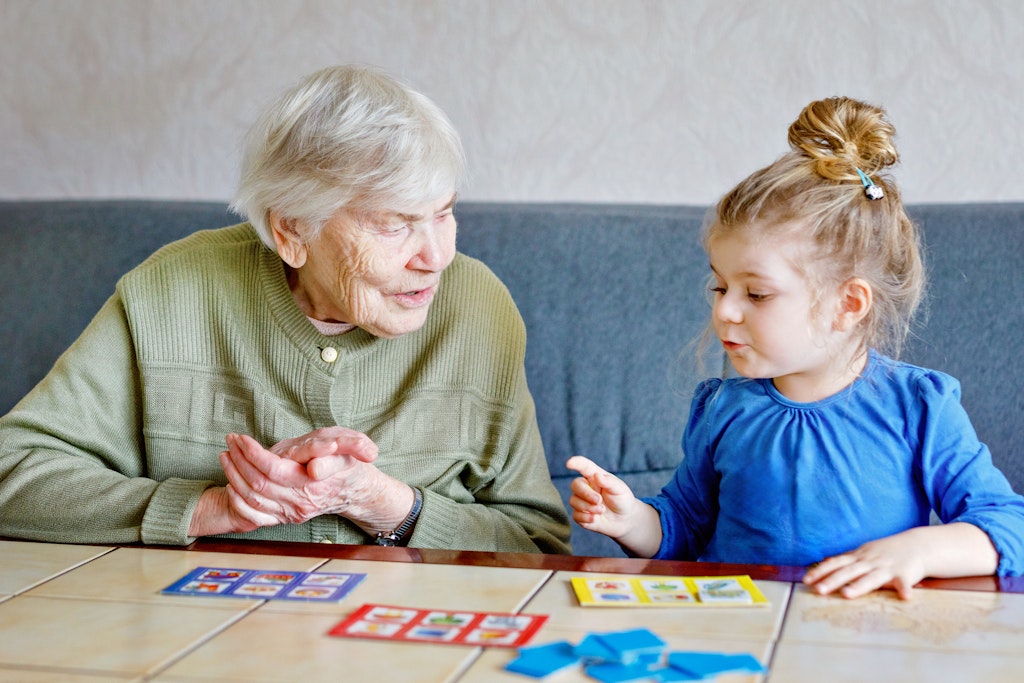
Intergenerational living has been a core approach to a life well-lived for countless cultures across the globe. Only in recent centuries has there been a move away from this intermixed dynamic of living, to smaller family units, in smaller confines and with those closer in age. And yet not only have studies found that intergenerational living can improve physical and mental health, many such experiments have played out right before our eyes. From programs in the U.K to Australia’s own Old People’s Home for 4 Year Olds, thousands of us have borne witness to the pairing of old with the young. With the increased excitement over the benefits of bringing intergenerational quality time to aged care homes, industry leaders, advocates and seniors now have renewed hope in what can be achieved for all involved.
Loneliness
The heart-wrenching statistic that 40% of aged care residents don’t receive any visitors has rocked many who work within the aged care sector. From aged care executives to front-line staff, those who passionately show up to make a difference in the lives of seniors have had an intimate view to the damaging effect isolation can have on human-beings. For the leadership team at Compton Gardens Retirement Community in Aspley, Brisbane’s north, the leadership team decided to do something about it.
Policy meeting need
Inspired by the joyful success of the ABC’s Old People’s Home for 4 Year Olds, the team in Aspley has created a program bringing together senior residents and a bubbly gaggle of little ones on the other end of the age spectrum.
Twelve or so pre-schoolers, alongside their parents, spend the morning engaging with residents and staff at the centre. From singing songs, swapping parenting suggestions and playtime, the fortnightly visits have become a treasured highlight for the centre’s seniors, staff and the young ones alike.
Caring goes both ways
Leonie Coade is the lifestyle coordinator at TriCare Aspley, speaking to the Guardian, she shares that the opportunity to interact and connect with the younger ones opens up memory and the opportunity to care. When there are songs sung she says, “I try to jog [the residents’] memories by saying, ‘what do we want to sing next?’”
“It’s important because they start to remember songs they sung to their children … it actually reconnects them with being a parent.”
For many seniors who have gone into RAC, the loss of autonomy and normal routine can lead to a loss of self and decline in mental and physical health. Psychologists and advocates have consistently reminded that the need for purpose and to care does not diminish with age.
The ability to play and lead songs provides an opportunity to step into the parenting role that many of them cherished, to step into not only receiving care but giving it.
The data is in
From medical journals to the experiments played out on national television, the data is unequivocal, intergenerational life and living is beneficial to all participants.
At the conclusion of the seven weeks of the ABC’s Old People’s Home for 4 Year Olds the numbers were in, the seniors involved were happier, stronger and more physically active. And the kids? They showed increased levels of confidence alongside empathy. A good mix for all parties.
Coade too has seen the repeated benefits of allocating aged care resources to crafting and maintaining intergenerational programs in care homes, her current program being the second mixed playground opportunity. The first she made to try and facilitate opportunities for seniors to step out of their rooms after the multi-factor difficulties and damage of the COVID period, seeing its benefits she has continued.
“They just accept you”
Speaking to the Guardian, Sheila Johnston, 94, shares that for most of her life she hasn’t opted to join in with group activities, “I’m not a joiner,” she says, “I never have been.”
Having seen the world as a naval officer, alongside her air force pilot spouse and four children, Johnston enjoyed a stimulating and rich life, upheld in later life by reading. However, with her failing eyesight, she has opted to solitary activities such as walking or going for drives with one of her children.
Yet with playgroup Johnston has re-connected with a vibrancy and connection she long since thought she had given up when travel no longer became a possibility. She has made an exception to her “no-joining” rule and comes regularly to playgroup to interact with the joyful circus of activity, people, sounds and unexpected moments.
“Because the children, they just accept you,” she shares. “You don’t have to try with them, you can just be. They don’t recognise any infirmity or disability – you’re just a person, which is lovely.”
Everyone improved
The benefits of intergenerational life, living and play are clear. Geriatrician Susan Kurrle, who supported the ABC program alongside other experts, was able to verify the benefits through mobility tests, questionnaires and observations. They arrived at conclusive and powerful findings, across strength, quality of life and risk of depression, every resident showed improvement.
She shares, “You could see that in their faces, in their movements.”
“There are very few people who aren’t moved by having a child run up to them and pull on their shirt and say, ‘come with me’,” she says.
“It basically comes down to joy and happiness … it’s not rocket science.”
Meeting each other’s needs
Alvee is a child, now five, who has gone through a transformation with the program. Initially unwilling to leave her mother’s side, the then two-year-old was afraid to venture out. Now Alvee, alongside her little brother are usually seen happily chatting to people of all ages. Martha Zettler, a German-Australian, is touted as the cherished lynch-pin in helping Alvee out of her social discomfort.
Zettler’s grandchildren are not close at hand, living overseas, and she has exuberantly become a part of the playgroup setting, cherished by many of the children. She has found significant enjoyment and laughter through engaging with and forming relationships with the children, even noting the bittersweet privilege of seeing them grow up.
Sharing with the Guardian, Zettler says, “I see the kids growing up – it’s unbelievable.”
“They came when they were two years old and now they’re going to school and we have to say ‘bye-bye’ to them.”
The playground has meant real-world improvements and opportunities as well. “We do a lot of camping”, Mel, Alvee’s mother shares with the Guardian, “and they’ll often find the tents or the caravans with the elderly, pull up a chair for afternoon tea, because they’re so comfortable.”
Future policy
While COVID was an obstacle to implementing the enthusiasm building for intergenerational programs, Kurrle is encouraged anew, sharing that she sees the intergenerational play movement as again gaining traction.
A 2023 study found that one in five aged care homes have an intergenerational play program to some degree. Experts and seniors who have had the pleasure of participating in one hope that that number will increase to all, and with more extensive and widespread programs at that.
Expert advocates hope that as momentum builds, more and more care homes will start to implement policies and programs bringing generations together. The benefits are substantial, reaching across all participants, and even to front-line staff who have spoken of the uplift in mood and morale in the home.
Kurrle shares that after ABC’s Old People’s Home for 4 Year Olds aired she received over 800 emails with people asking and wishing to get involved with similar opportunities. The data supports the program and the appetite is present from many areas of the sector to make it happen.
With a collaborative effort between government, aged care leadership and allied health, significant improvement can be brought forward to how aged care cares. By regularly bringing a mix of ages together, aged and child care may both see profound and lasting benefits.


