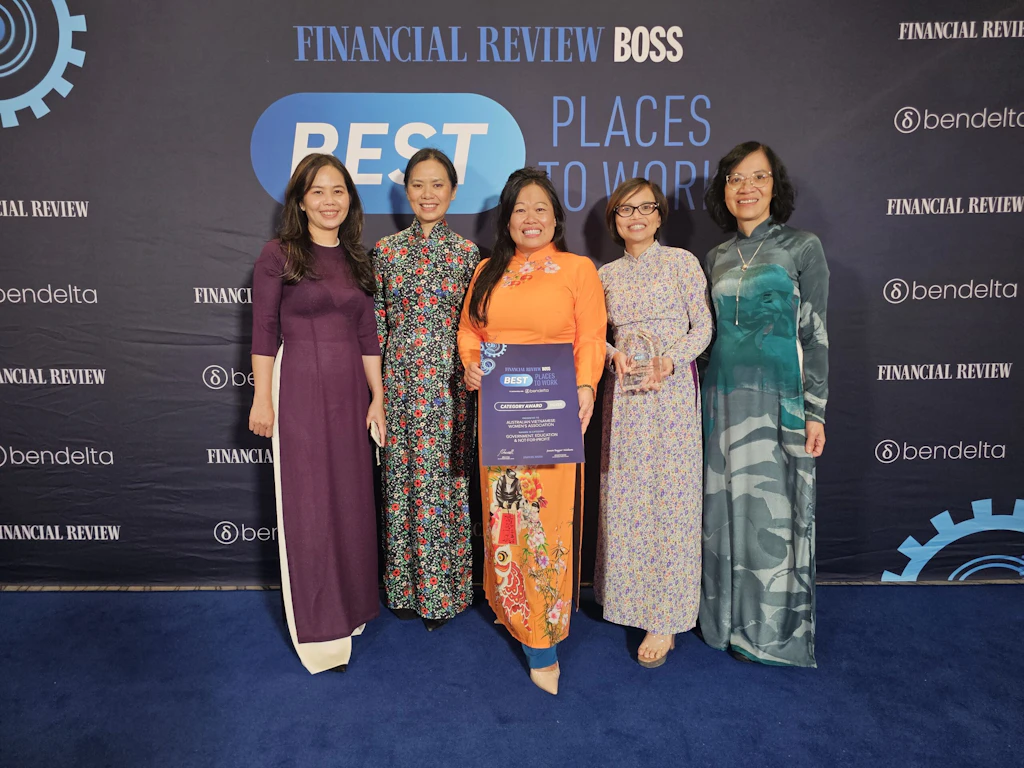
The Australian Vietnamese Women’s Association has been named a Silver Finalist in the Government, Education and Not-for-Profit category of the AFR BOSS Best Places to Work List, marking a significant milestone for a community-based provider delivering aged care and disability services across Victoria.
Announced on 2 April, the recognition places AVWA among the top-performing workplaces across Australia and New Zealand, following a rigorous assessment process driven largely by direct employee feedback.
AVWA operates as a community-led organisation, supporting Vietnamese Australians through culturally responsive services spanning aged care, disability, family support and health.
In a system that often struggles to respond to cultural and language diversity, that approach fills a very real gap. For many older people, particularly those with limited English, navigating aged care can be difficult. Providers embedded in the community are often the difference between accessing support and going without it.
That connection also shapes the workforce. Staff are not just delivering services, they are part of the same communities. The result is often stronger engagement, deeper trust and more consistent care.
CEO Nicky Chung said the recognition reflects the organisation’s focus on creating a workplace where people feel valued and supported.
“We have worked tirelessly to ensure our staff feel valued, heard, and supported,” she said, pointing to initiatives such as employer-funded parental leave, flexible working arrangements and additional cultural leave, including time for Vietnamese New Year.
AVWA President Bich Cam Nguyen said the award validates a long-term focus on stability and governance as the organisation has grown.
The not-for-profit now employs around 450 staff and 95 volunteers across four Victorian offices, delivering services across five program areas, including aged and disability services.
At a time when aged care providers are grappling with workforce shortages and rising expectations, the result highlights a broader shift. Community-based providers are not just complementing the system, they are increasingly carrying parts of it.


