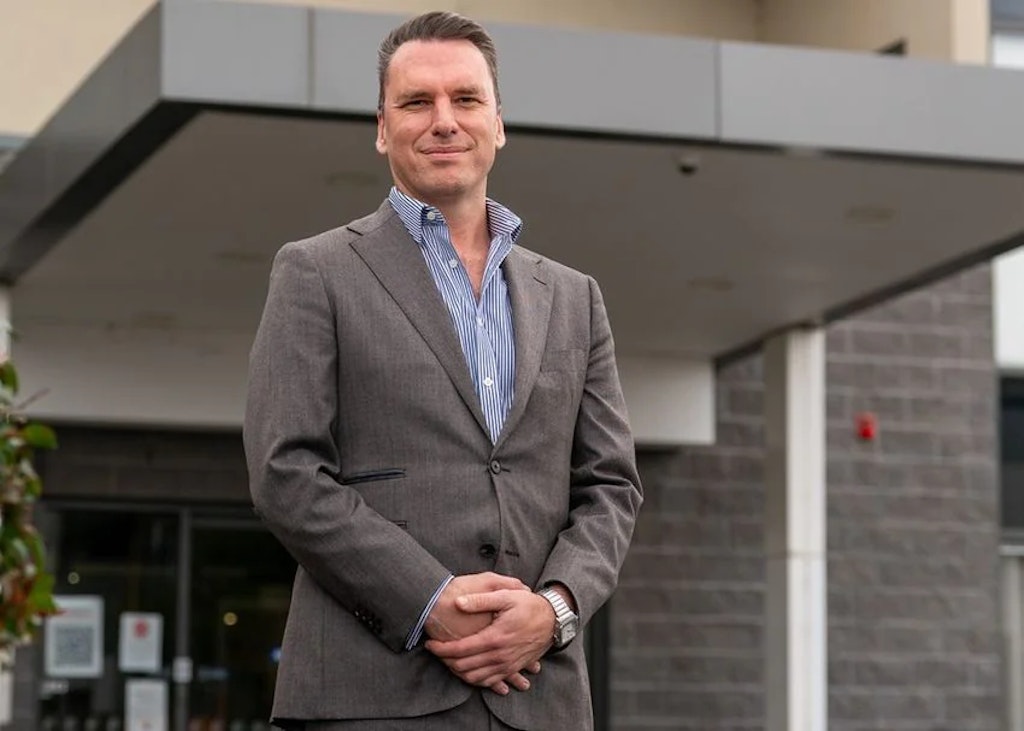
By Cameron McPherson, CEO of Medical & Aged Care Group (MACG)for Hello Leaders print, read the full version of this article in the sixth print edition here.
For Cameron McPherson, CEO of Medical & Aged Care Group (MACG), leadership in aged care starts with proximity to the people doing the work.
“Two-thirds of our staff are personal carers,” he says. “Logic would have it that I need to spend time with them and actually ask questions. The floor is where it all happens.”
That philosophy is rooted in lived experience. McPherson stepped into the CEO role in his early thirties while supporting his father through a two-decade battle with motor neurone disease.
“Seeing care through the eyes of next of kin gave me a front-row seat to what good and bad care looks like. He showed me resilience, he showed me strength, and he showed me how much dignity matters.”
Those lessons still shape how he leads today.
“It broke me… But I know he’d be proud of what I’m doing and that’s why I’m so hands-on. It’s a family business and I consider the staff part of that family.”
His commitment to being present was tested early. In 2008, shortly after becoming CEO, he found himself cornered by a resident at Casey Manor who was pawing at him and meowing like a cat.
“That moment showed me this isn’t a cruise ship. This is residential aged care.”
Since then, time on the floor has been a non-negotiable. “You cannot understand the culture of your organisation if you only see it through reports.”
That perspective has influenced everything from facility design to investment in AI-driven systems that reduce paperwork for carers. “Technology helps get them back on the floor, doing what they love: being with residents.”
McPherson is unapologetic about what he sees as a lack of authenticity in parts of the sector.
“There’s so much inauthenticity out there… you’ve got to be real to be respected.”
His message to fellow CEOs is blunt.
“Get out of your ivory tower. Get out and smell the roses and all the other smells you might encounter on the floor of your facilities.”
And above all, listen. “The best ideas come from the floor.”


