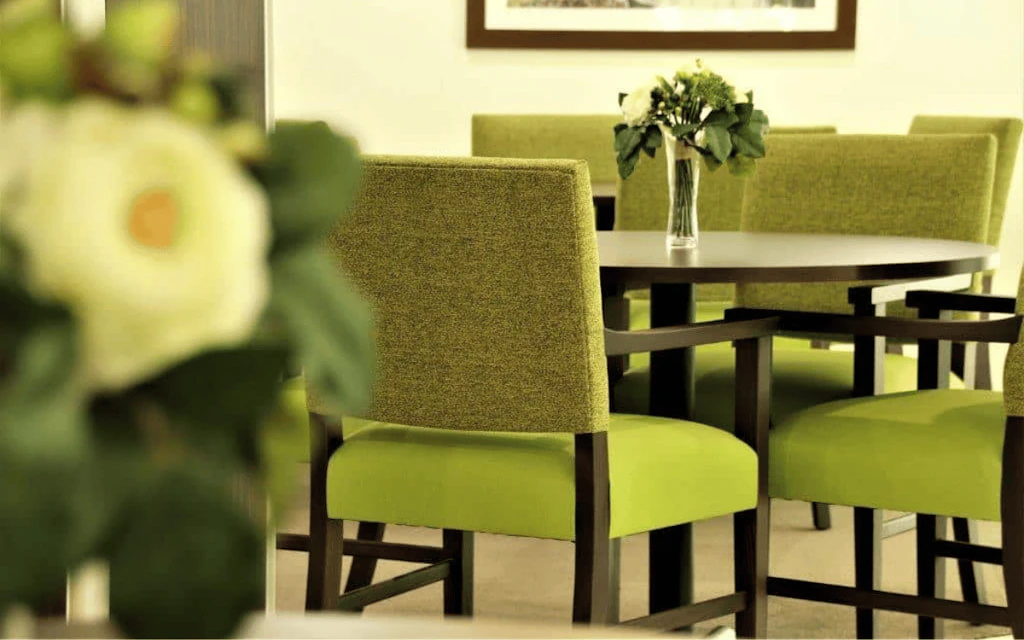
Furniture is often one of the last decisions made in an aged care build or refurbishment.
Tamlyn Carr, Director of Wentworth Care, believes it deserves to be one of the first.
The chairs residents sit in, the tables they gather around, and the materials selected all influence how an environment works.
“When selecting aged care furniture in Australia, there is a much stronger focus on creating smaller, more homelike environments rather than traditional institutional settings,” Tamlyn says.
“With models of care moving towards smaller households of around 16 residents, providers want furniture that feels residential and comfortable, while still meeting the practical demands of aged care.”
Smaller dining tables, bariatric options, chairs with castors and furniture selected around different care needs are becoming increasingly important.
“One example of combining practical products with homely solutions is that a lot of clients will order height adjustable chairs, but these are reupholstered before delivery to fit in with the aesthetics of their environment,” Tamlyn says.
One chair won’t suit every resident
If there is one mistake Tamlyn sees regularly, it’s choosing the same chair for every resident.
“People in aged care are different heights, shapes and sizes and have different mobility needs, so one chair simply cannot suit everyone,” she says.
Instead, she recommends building variety into shared spaces with different seat heights, widths and chair styles.
“They can be upholstered in coordinating fabrics, keeping spaces cohesive without compromising residents’ individual needs.”
Furniture trials are also an important part of the process.
“We regularly take furniture to sites for trials among staff and residents, and there is never one chair that everyone agrees is perfect. Each person has their own preference.”
Designing furniture around dementia-informed principles
Furniture is also an important part of dementia-informed design.
“Dementia-informed design is about making an environment easy to understand and navigate,” Tamlyn says.
“Furniture should provide good contrast with its surroundings, be familiar and recognisable in style, and support residents to sit and stand independently wherever possible, as safely as possible.”
For providers, this means looking beyond colour palettes and finishes and considering how design choices affect residents’ ability to navigate, participate and remain independent.
Infection control without an institutional feel
The challenge for providers is finding materials that meet infection control requirements without creating environments that feel clinical.
“There is a growing shift towards vinyl seating at the moment,” Tamlyn says.
“There is such a wonderful range of vinyls to choose from now, that can be tied in with fabrics or used on their own.”
Vinyl still gets a bad reputation, but Tamlyn says it deserves a second look.
“A lot of people still envisage vinyl as it was in the 60s and 70s, but in many cases now, you can’t tell the difference between vinyl and fabrics by looking at it.”
Many modern vinyls can be bleach-cleaned or wiped down with healthcare-grade cleaning products, while laminate provides durable, easy-to-clean tabletop options with timber-look finishes.
Furniture needs to work for staff too
Furniture doesn’t just affect residents. It changes how staff work too.
“Correct seat heights and supportive arms can help residents stand more independently, while castors on appropriate dining and lounge chairs can assist staff when positioning residents who have limited mobility,” Tamlyn says.
Providers are increasingly requesting dining chairs with castors, wheelchair-clearance tables and recliners that allow residents to move into shared spaces while staying in a familiar chair.
Quality is another consideration Tamlyn believes providers should not compromise on.
“Furniture must be the best quality you can buy and must be fit for purpose so that it is strong and durable for the environment that it is in. Residential furniture in an aged care environment, for example, is not suitable.”
Looking ahead
As residents enter care later and with more complex needs, Tamlyn expects demand for adaptable furniture, bariatric options and mobility-supporting features to continue growing.
“I would hope to see a direction where components of furniture can be replaced instead of the complete item,” she says.
“Similar to how you could replace a chair cushion or a seat back.”
Tamlyn also expects timber-look aluminium furniture to become more common, offering the appearance of timber while addressing some of the durability challenges associated with natural materials in aged care environments.
Furniture selection is also about creating spaces for connection, with smaller areas for activities, quiet time and social interaction helping large spaces feel more purposeful.
For providers planning a refurbishment or new build, furniture should be considered as part of the broader design strategy – supporting resident independence, staff safety, operational efficiency and the creation of environments people want to spend time in.


