
With just weeks to go until the new Aged Care Act and Strengthened Quality Standards take effect, most aged care providers remain uncertain about how ready they truly are for the changes.
A new national poll of 230 organisations has found that only 3% of providers feel fully prepared for the 1 November reforms. Almost half (48%) said they were mostly ready but still had “minor gaps,” while a similar proportion (44%) said they had “significant work required.”
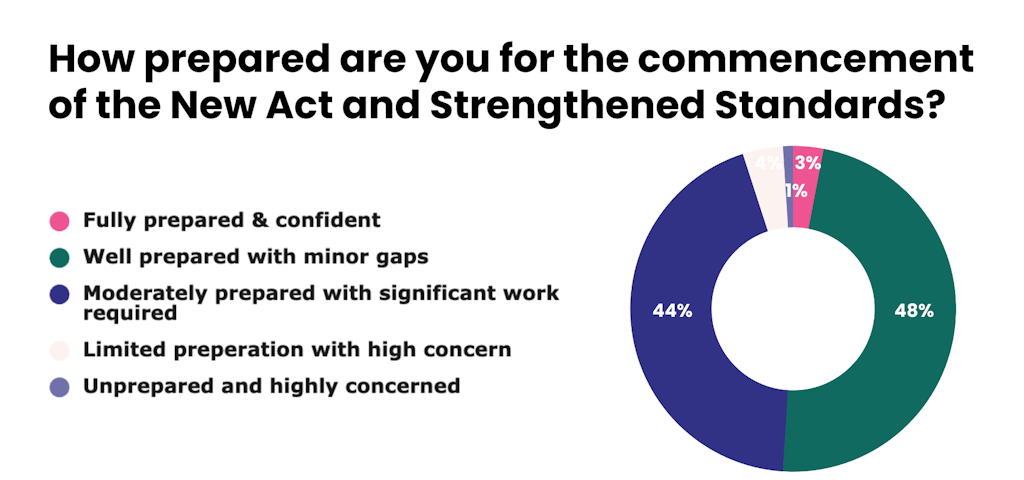
The survey, conducted ahead of a sector briefing hosted by consultancy Mirus Australia, paints a picture of a workforce working hard to adapt but struggling under competing operational and compliance pressures.
Compliance, workforce and financial risk dominate
When asked about the areas most at risk of negative impacts from the reforms, governance and compliance topped the list, followed closely by financial sustainability and workforce burnout. Clinical care and consumer expectations were also raised as growing pressure points as providers attempt to balance reform implementation with day-to-day delivery.
Regulatory compliance readiness was named the single most difficult area to prepare for (31%), ahead of operational implementation (25%) and workforce readiness (23%).
Confidence in government support remains low
Only 5% of respondents said they believe the government and regulators are strongly ready to support the sector through the transition. Nearly two-thirds said support so far has been “somewhat in place but patchy,” and one in four felt it had been inadequate.
According to the report’s authors, Mirus Austrlaia, these findings reflect the sheer scale of the reform challenge.
“The reforms bring opportunities to raise standards and embed better governance,” said Mirus data scientist Tyler Fisher. “But they also introduce new operational realities that can’t be underestimated.”
A critical test for sector leadership
The readiness gaps highlight the strain of reform on an already stretched sector. Many organisations are balancing implementation planning with rising costs, recruitment challenges and evolving expectations from residents and families.
As one executive told Hello Leaders earlier this year, “You can’t demonstrate quality if you can’t demonstrate experience.” That sentiment is likely to define the months ahead, as providers turn the reform rhetoric into measurable outcomes for older Australians.


