Voluntary assisted dying (VAD) legislation now exists in nearly every Australian state and territory. With more than 7200 people having died via VAD in Australia since 2019, many staff are still navigating this territory without clear guidance – or the emotional preparation it demands.
However, it’s a process that often begins quietly.
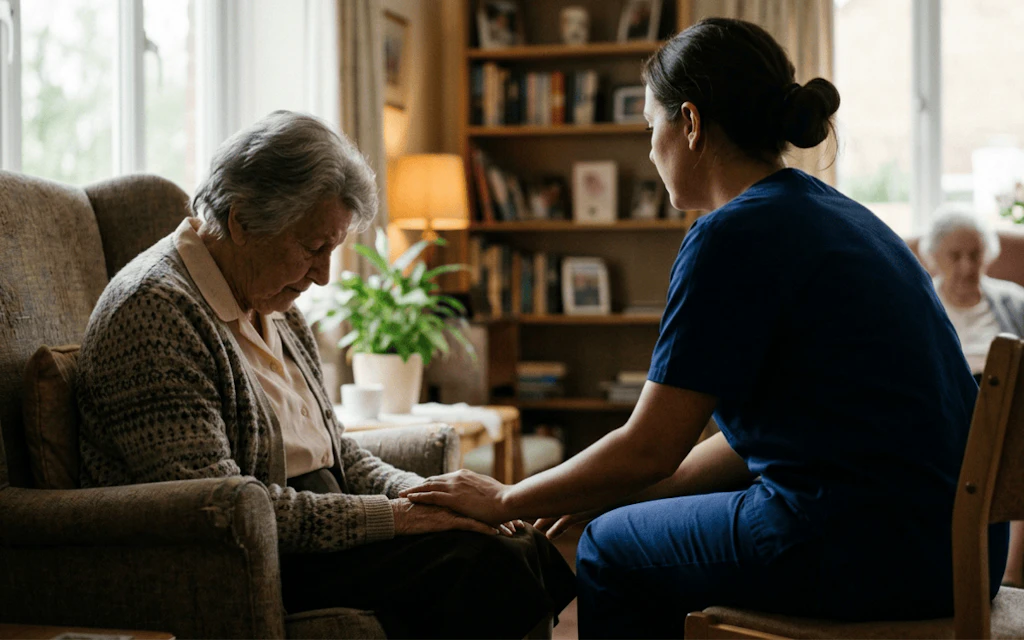
A resident mentions it during a routine care conversation. Not in a formal meeting, not with a doctor present, but while a carer is helping them wash or settle in for the night. Frontline staff are frequently the first to hear it and often the last to one in the room.
What staff can, and can’t, do
When a resident raises VAD, staff are expected to listen, without judgement, and acknowledge it as a real and lawful option.
What they can’t do is:
- Offer clinical advice
- Express a personal opinion, or
- Initiate the topic themselves.
The risk of undue influence in an aged care relationship is taken seriously under all Australian VAD frameworks. So if a worker doesn’t agree, they’re not required to participate, but they can’t just walk away.
Under legislation, such as Victoria’s Voluntary Assisted Dying Act 2019 and NSW’s equivalent 2022 Act, they have to refer the resident to a supervisor or colleague who can help. They can escalate the request, typically to a registered nurse, then to management, and on to the resident’s GP.
The reality for staff
What the legislation doesn’t capture is what it costs the people doing this work.
“I’ve had two clients apply for VAD last year: both had MND (Motor Neurone Disease),” says one home and community carer with experience across both home and residential settings. “One passed away before the date she’d picked and the other went through with it.”
“They’re very hard conversations to have with loved ones. People feel guilty they’re ‘giving up’ and that they’re letting people down. It’s a tough job to reassure someone choosing VAD that that’s not the case.”
The grief, she says, begins long before death. “It’s very difficult and emotional to witness and be part of the grieving process and loss before the person is gone, while that person is still alert and aware.”
For others, the harder reality is watching residents who never reach approval. A carer with 15 years’ experience describes it plainly: “Majority get knocked back in their request. I’ve looked after quite a few who kept getting knocked back. If the process was more certain for them there would be a lot less distress.”
The process residents face
After a resident has requested VAD, the path is neither quick nor simple. In QLD, the process is thorough and state legislation eligibility criteria is strict. They must make three separate requests over a minimum timeframe – and be independently assessed by two VAD-trained medical practitioners.
Importantly, the clinical responsibility sits entirely outside of the resident’s aged care home. Coordinating medical practitioners – often external – manage the eligibility assessments and often the administration too. State-run services do exist to connect residents with trained practitioners, including via telehealth, which is critical for those with limited mobility, but there’s calls to make it more accessible.
Homes can register as non-participating providers, but they can’t leave residents without options. They must still facilitate access to external VAD support, which can take a toll of staff, residents and loved ones.
Supporting staff through it
Sector bodies including Ageing Australia and the Australian Nursing and Midwifery Federation (ANMF) have both published workforce guidance on VAD. The Aged Care Quality and Safety Commission’s Guidance for Approved Providers on Voluntary Assisted Dying fact sheet outlines provider obligations, including the duty to make sure staff aren’t left unsupported.
In practice, that support looks different from home to home. Debriefs, access to Employee Assistance Programs, and clear escalation protocols matter not just for compliance, but for the people who carry these conversations home.


