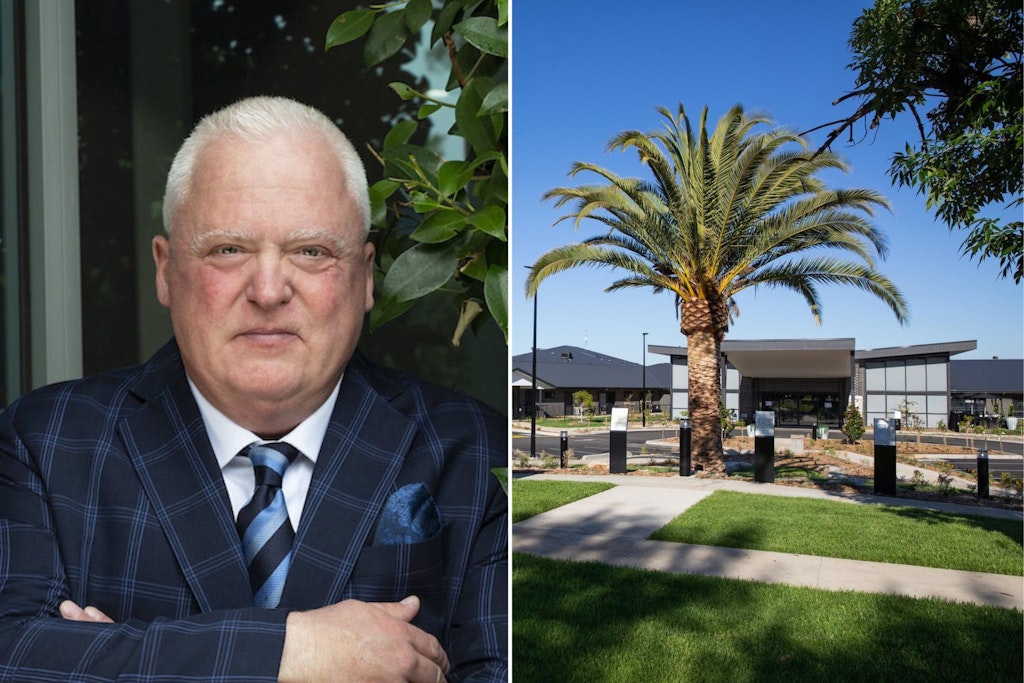
Following the announcement of Signature Care’s sale to For Purpose Investment Partners (FPIP) aged care arm, For Purpose Aged Care Australia (FPACA), Signature Care Founder Graeme Croft has revealed to hello leaders that his next step is arguably the biggest of all – retirement.
Last week, after 40 years of operation, Signature’s acquisition by FPIP was revealed with the aged care newcomer set to take over operations of its 14 homes following Government approval.
Mr Croft said it was the right move as the not-for-profit (NFP) ownership will provide staff and residents with far more benefits.
“A NFP buyer in the growth phase assists Signature Care as NFPs receive benefits that taxpayers and for-profit organisations do not, such as savings for the buyer of about $6 million in payroll tax annually,” he said.
“Employees benefit through salary sacrificing, which aids in employment retention. This deal also releases capital for further expansion of the aged care assets.”
While the takeover of Signature Care is still dependent on Government approval, it appears all but likely it will occur. Sister company Croft Developments will continue to develop new homes on land it owns, although the actual operations will be in the hands of Group CEO Matthew Filocamo and the Board.
“Personally, after 40 years and turning 65 shortly, it’s time for me to retire,” Mr Croft said.
“As for our other Directors, Ramsay Croft (40), Amal Witnish (39) and Stephen Pollock (55), they have a number of new homes to build and commission for FPIP over the next couple of years.”
FPIP’s steering of the ship will not see Signature Care’s identity disappear, however. The organisation also preserved the identity of its first acquisition, Luson, and Mr Croft reinforced that here will be continuity for staff and residents.
“Through this acquisition, FPIP gains great access to a well-committed management team, well-trained and resourced staffing mixes at both facility and head office level and IT Infrastructure Signature care invested heavily in which will aid the buyer,” he said.
Investment could easily be the keyword for this sale, too. Mr Croft has invested in growth and development throughout his career and Signature Care has now been sold with six homes still in development.
But as he explained to hello leaders, all of the existing homes have filled quickly, showcasing it is a testament to their choice of location due to need and unmet demand from a growing 80-plus population.
He also said no capital expenditure is required to upgrade or maintain existing homes designed to promote a smaller home model of care. Nor is too much work required to attract additional staff.
“Signature Care has invested in training to gain new local recruits from the community that the facility operates within, and supports them with training from personal care assistant through to Registered Nurse Division Two and Registered Nurse Division One placement,” he added.
Click here to continue reading about the Signature Care acquisition by For Purpose Investment Partners.


