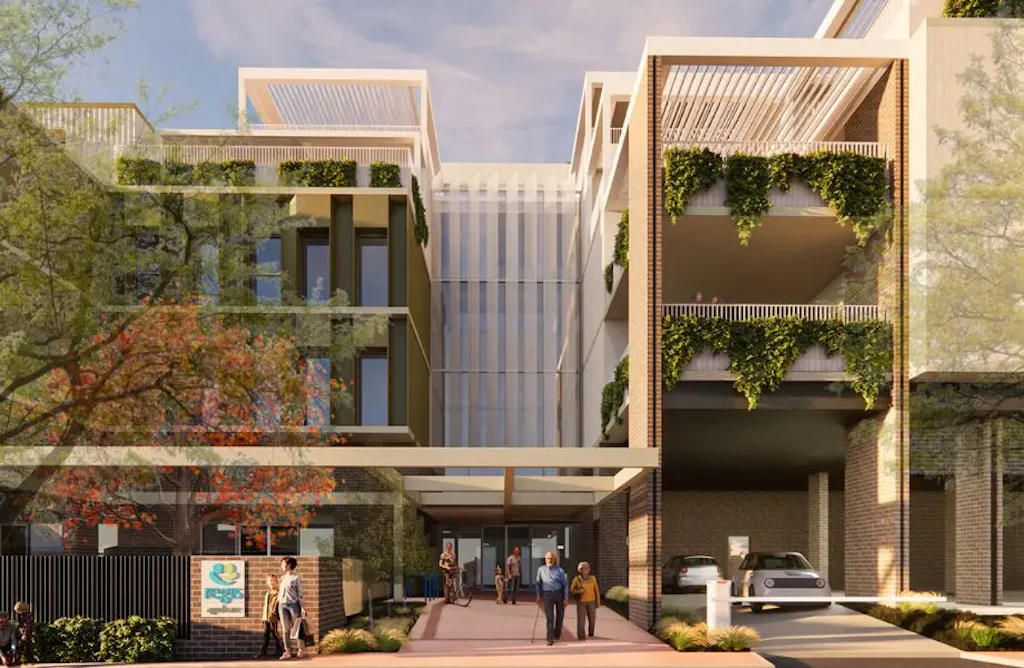
A disused fish factory in Adelaide’s inner suburb of Parkside, Adelaide is set to make way for a five-storey aged care home, as providers continue to push into high-demand urban locations despite planning complexity and rising costs.
National provider Regis Aged Care has secured a positive recommendation for the redevelopment, with a senior planner advising approval of the proposed 156-bed facility.
The project, located just 100 metres from the Adelaide Park Lands, will replace the former industrial site with a large-scale residential aged care home designed to meet growing demand in inner metropolitan areas.
In a report to the State Commission Assessment Panel, senior government planner Joanne Young described the proposal as appropriate for the site, recommending it proceed to approval.
That recommendation was supported by a largely favourable design review from South Australian Government Architect Kirsteen Mackay, whose office assessed the development’s scale, built form and integration with the surrounding neighbourhood.
While the final decision rests with the panel, such endorsements typically signal strong momentum towards approval.
A shift back to the city
Beyond the planning process, the proposal reflects a broader shift underway across the sector.
After years of development skewing towards outer suburbs and greenfield sites, providers are once again targeting inner-urban locations where proximity to family, transport and community infrastructure carries increasing weight for residents and their families.
These sites, however, come with trade-offs.
Higher land values and tighter planning controls often require larger, multi-storey developments to make projects financially viable. At 156 beds across five levels, the Parkside proposal reflects that reality, balancing density with operational efficiency.
Repurposing ageing infrastructure
The use of a former industrial site also highlights a growing trend in aged care development.
As traditional development land becomes scarce, underutilised industrial properties are emerging as viable alternatives, particularly in established suburbs where zoning and infrastructure can support higher-density use.
For providers, these sites offer a rare combination of location and scale. For communities, they often represent a shift in how neighbourhoods evolve, replacing legacy industrial uses with residential care and services.
Community expectations and constraints
Despite the positive recommendation, projects of this scale in established suburbs rarely proceed without scrutiny.
Height, traffic and neighbourhood character are common pressure points, particularly when developments exceed the prevailing built form of surrounding streets.
Balancing these concerns with the need for modern, well-located aged care infrastructure remains one of the sector’s ongoing challenges.
What it signals for the sector
The Parkside proposal underscores a clear direction of travel.
Providers are increasingly willing to navigate more complex planning environments in exchange for better-located assets. At the same time, the scale of developments continues to grow, driven by workforce pressures, operating costs and the need for long-term sustainability.
For a sector under sustained reform and financial strain, projects like this are less about ambition and more about necessity.
The question is no longer whether aged care belongs in inner-urban communities, but how those developments can be delivered in a way that meets both resident expectations and community acceptance.


