
The first stage of public consultation of the new Aged Care Act is underway after the Department of Health and Aged Care released the Act’s service list.
The Aged Care Bill was presented to parliament in September, ending months of speculation over the new Act’s chances of being legislated by mid-2025. There is still some way to go, however, as the Coalition party and the general public will have opportunities to review the document.
The Department said it will continue to release more Rules from the new Act in stages, allowing interested parties to evaluate the document in detail section by section.
“We continue to engage across the entire sector on our new aged care laws. This will ensure everyone is ready for the start of the new Aged Care Act from 1 July 2025. We will be progressively inviting feedback on some of the Rules that will be made under the new Act,” the Department said.
“The new Act will result in major changes across the aged care system. This consultation on the Rules is a valuable opportunity for:
- Everyone to better understand what these changes will mean for them
- Everyone to learn how the Rules will impact older people, and the quality of care they receive
- Us to ensure the Rules accurately represent feedback collected through previous consultation
- Providers to tell us what they need to prepare for the new Act.”
What does the service list include?
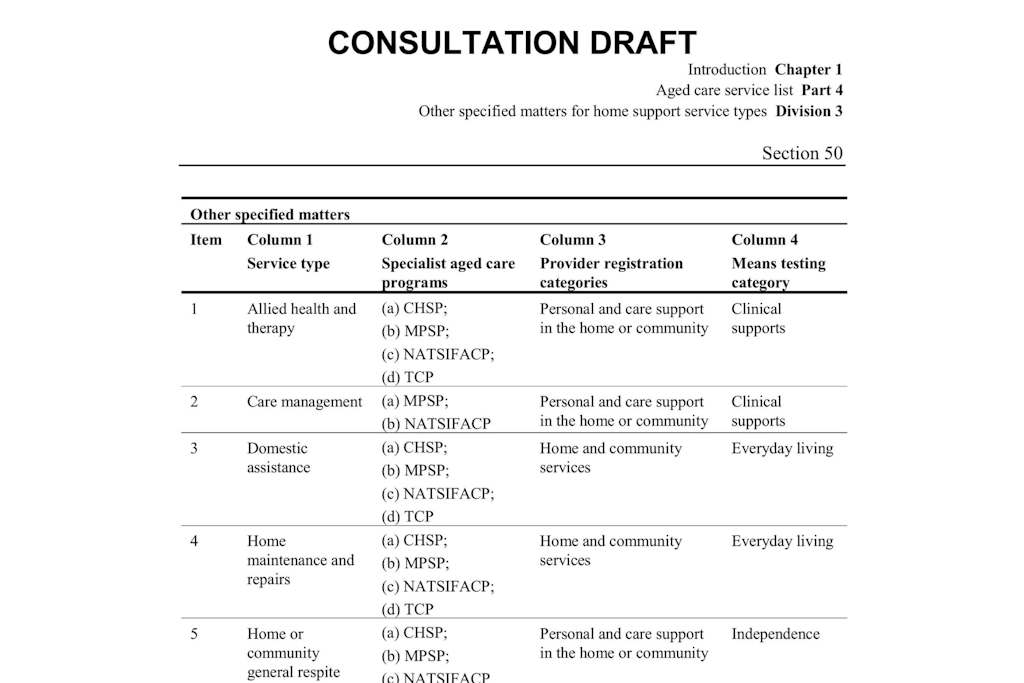
The service list itself includes 22 types of services, including allied health and therapy, care management, home maintenance and repairs, nutrition and restorative care management.
Additionally, there are five provider registration categories: home and community services; assistive technology and home modifications; advisory and support services; personal and care support in the home or community; and nursing and transition care.
Each service listed and described is a service that may be Government-funded, while the document also outlines what – if any – specialist aged care program a service type can be delivered under. Insights into a means-testing category, subsidy basis or fee cap are also included in the document.
More information about the consultation, including the aged care service list, is available here.
What are stakeholders being asked?
Anyone interested in providing their feedback regarding the service list can directly upload a submission. This allows for a wide range of feedback, including any concerns over the parameters of a service, its description or associated funding categories.
Feedback regarding pricing can be included, however, the document does not specify any base pricing with the dollar amount per hour listed as “TBA”.
When does public consultation end?
Industry stakeholders will have until October 31, 2024, to submit feedback on the service list. This can be done via an online form.


