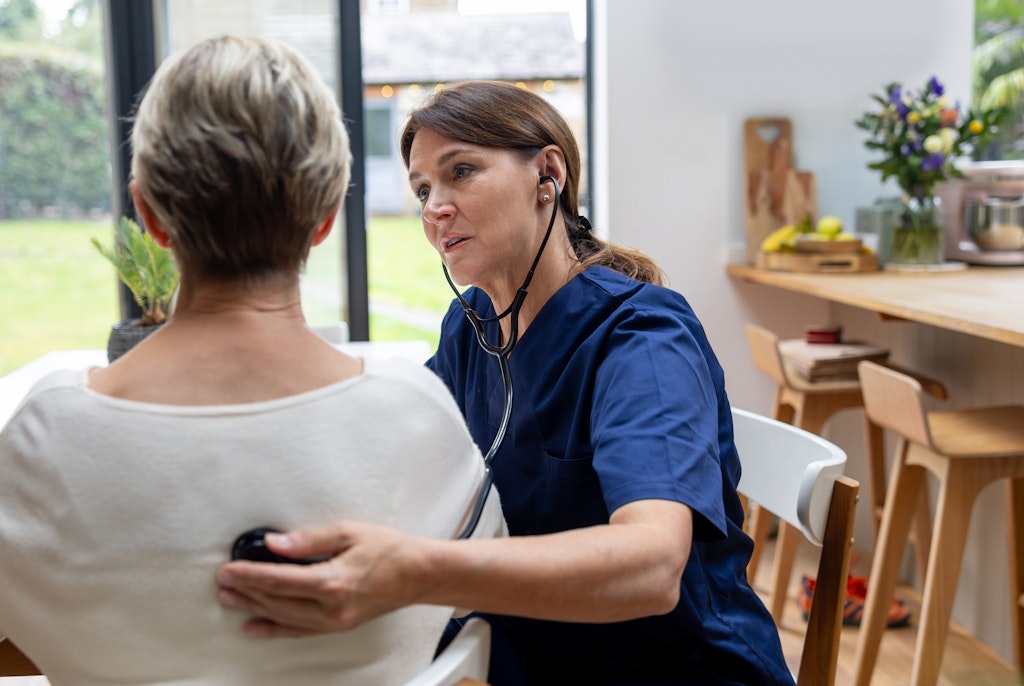
Embedded within Australia’s demographic, health and aged care structures are some overt trends. The population is ageing, available beds in residential aged care (RAC) have not kept pace and attempting to access preventative care measures has become more difficult. Between provider leadership, advocates, GPs and families, calls for change have been hitting upon a common theme; Most seniors want to age in place at home, and residential aged care should be kept for those with the most complex and serious conditions. In order to work towards this reality, sector leadership across health and aged care have renewed calls for reform that will support GPs making increased home visits. Seniors should not be languishing in hospital without having options to be discharged, they say. Seniors should not be presenting early to residential aged care because conditions have unnecessarily deteriorated. Central to solving this is pivoting funding and reform back to supporting home visits.
The wider picture
Looking at government figures and research conducted by the University of New South Wales, the numbers are stark. Across the country GP home visits have fallen by 85 per cent over the past thirty years. Analysts and industry leaders point to these figures as a window into the financial and care conditions assailing the nation’s hospitals and residential care facilities. Provider and hospital heads, alongside clinical front-line staff are increasingly seeing seniors with chronic illnesses present to hospital and facilities early, due to sustained difficulty in accessing basic care at homes for the years and months prior.
Analysts and advocates have frankly named the consequences of this systemic failure. Not only are seniors living in undignified hospital settings, or entering residential aged care under duress but the cost simply does not add up for the sectors and the taxpayer. Sector experts have routinely advised government that the daily cost for hospital, upwards of three to four thousand, far outstrips the cost of funding fees and incentives for GPs to make house calls. Preventative measures, say countless leaders, is a key part towards addressing the current patient and financial strain of hospitals and residential aged care.
Contextual reality
Alyssa Smith was a teenager when her mother first displayed symptoms of the neurodegenerative disorder, Huntington’s disease. She remembers that of all the challenges they faced as a family, it was trying to get her mother to the GP that was one of their biggest.
Speaking to the ABC she recalls, “part of it was this mental game of, ‘Do I wait around long enough to see the GP that I need to get Mum to see, or do I take her home and try and calm her down?'”
“And it was almost impossible to get GPs to come to the home.”
Smith and her mother are an all too common case of systemic funding resulting in limited access to basic medical care. Advocates highlight that such care is integral to assisting those with needs with early intervention, to maintain health levels and prevent unnecessary and early deterioration.
The difficulty to try and get her mother to the GP simply became too much for Smith, and it was a central reason why she decided to place her mother in care. Smith found that accessing GP care while her mother was at home was near impossible, so she went where the care was.
John Crimmins now treats her mother in the aged care facility. He too affirms that being able to go to patients has a significant impact on care and relationship.
He says, “I find that visiting these patients in their home makes me more accessible to them.” He agrees that when it comes to patients with chronic and complex diseases, as well as seniors, it makes substantial sense for doctors to go to them. Difficulty moving, transport issues and difficulty managing software for appointments and waiting for hours can mean many don’t even try to access medical treatment.
The decline
Doctors and cross-sector experts are increasingly alarmed at the lack of funding and support to provide home care services.
Crimmins recalls that home visits were an accepted and helpful norm in the past century, “it was quite common for a GP, up until 20 years ago, that they’d go out and see a young family, see someone who was dying, visit aged care people.”
But over the last thirty years those visits have declined by a staggering 85 per cent. Dr Joel Rhee is the head of the Discipline of General Practice at the University of New South Wales, he has extensively studied the figures and warns that home visits are going in exactly the wrong direction when placed against Australia’s ageing population.
He says, “when we look at 1994, I think there were around 3.9 million GP home visits all across Australia.” In 2024, he and his team saw that number plummet to slightly over half a million.
And yet he reminds, this trend is happening in the face of statistics that call for the exact opposite, “at the same time, there has been an aging of the population, and the patients have more chronic diseases.”
Delving into the why of the significant drop, Rhee shares that predominant reasons uncovered; Lack of appropriate funding to cover time taken for home visits, personal safety concerns and a lack of doctors with the capacity to conduct them all rank highly.
“The Medicare rebate for a GP doing a home visit is only $30 more than if the patient saw a GP in clinic, and that is expected to cover travel time and additional costs,” Dr Rhee noted.
“That additional rebate is also expected to cover a doctor visiting more than one patient.”
The benefit
In speaking to the ABC Dr Rhee highlights that the research is unequivocal, GP home visits result in positives and many of them. The “positive impacts” he shares range from “improved quality of life” to the monumentally hot-button topic of hospital strain, with home visits leading to a “reduction in hospital admissions, and an increase in the likelihood of people at the end of their life dying in the preferred place of care”.
Echoing the sentiment of advocates, Rhee and Crimmins say that while telehealth has yielded some positive impacts for accessing health, this channel of healthcare can never comprehensively meet the care needs of complicated health conditions for many seniors, disabled and those diagnosed with chronic conditions.
Analysts find that it is the most vulnerable, with conditions left untreated, that are likely to end up in hospital with nowhere to go, or presenting early to RAC. The system, they say, must have those with chronic and complex conditions first and foremost in the policy strategy of preventing deterioration, this means early diagnosis and early management. Experts are clear, this approach requires relational and consistent care done in person.
Crimmins highlights, “if you don’t have outreach, it means there’s a large group of patients … who are being missed in terms of early diagnosis and early management.”
Early admission
The trends and statistics of seniors presenting to hospital and residential due to deteriorating conditions can be summed up in the thousands of those in hospital but brought to the human reality in personal stories.
Marilyn Sue was caring for her friend Sue, a cherished friend who had been diagnosed with dementia. She pragmatically shares the devolving of her friend’s ability to stay at home due to difficulty receiving help there.
“Sue’s GP visits out of the home became less and less … and I started trying to get a doctor to visit her at home”, she shared with the ABC, “But her GP wouldn’t do it.”
She made extensive searches to find a doctor who would make a home call but with no success.
“It became very clear that nobody wants to pick up home visits for a demented person.”
Compounding issues continued, locum doctors who were tasked with conducting visits at home after hours stated they could not care for Sue due to her complex needs. And when it came to the government’s home care package, the clinical assistance could not fill the gap a GP home visit would have provided.
It was at the end of attempting to navigate the system that Smith had to present her friend to hospital, in the pursuit of the greater goal of getting Sue into RAC.
“One of the main contributors for me getting Sue into an aged care facility is because I couldn’t get a doctor to support me at home.”
Provider heads are increasingly highlighting to government that due to lack of care at the preventative end, pressures on RAC are growing beyond the ability to build beds and meet demand. As demand builds, many leadership share, so too does the difficulty to keep up with regulatory oversight and the genuine desire to provide excellence in care.
Sector insight
The consequences of policy and lack of funding, for preventative care measures like GP home visits, is playing out in real-time for provider heads.
Dat Nguyen is a partner and manager of HomeCaring, a provider servicing home care packages. In tracking alongside clients receiving home care services, he has had a front row seat to clients struggling to receive the care they need to prevent deterioration. He shares that he sees too high a number of senior clients entering into RAC early due to difficulty accessing basic medical care in their own homes.
Nguyen shared with the ABC, “whereas if they had constant or close monitoring from their GP, they would be safer and more independent at home”.
Alongside hundreds of other aged care leaders, he sees a discrepancy between the reality on the ground as opposed to the legislative aims for aged care embedded in the new aged care act.
The new act has been shaped by government and current Aged Care Minister Rae, to facilitate what seniors have predominantly stated they want, to age in place. Publicly Rae affirmed this, noting, “Australians want to stay in their homes longer”, with the new Support at Home scheme being upheld as the vehicle to substantiate that goal.
And yet advocates and providers are seeing cracks widen. Nguyen shares, “the Support At Home or My Aged Care primary objective is to keep the senior population at home as long as safely as they can.”
“[In reality] That’s not the case.”
He too supports reform through Medicare changes, to raise rebates for GPs to conduct home visits and to cover further costs of travel and extended consulting time. In this measure he sees a sustainable solution to keep seniors at home for longer and healthier.
Reform opportunity
Crimmins shares that the model to support GPs conducting home visits is simple, they should be compensated at the same rate as doctors who currently visit aged care facilities.
He says, “a GP going into an aged care sector actually gets the fee for seeing the patient plus an additional fee for caring [for] someone in aged care.”
Rhee considers that the question of doctors conducting home visits should not be down to only good will but the system supporting GPs to cover costs as they provide vital services for the community. Advocates and analysts additionally point to the savings yielded in preventing costly hospital care, the strategy to limit early and stuck patients in hospital leading to strong policies of common and financial sense for all demographics.
Dr Rhee notes, “until there’s some increase in Medicare rebates and better resourcing and improved structure, I’m actively having to draw on my goodwill, I guess, and my calling as a doctor to provide that level of care”. Advocates and leaders attest, doctors should not have to. The savings are evident in funding GPs to do home visits and reducing the wasted millions of unnecessary hospital strain.
When contacted by the ABC Canberra’s Health Department noted that it was conducting an examination into the “Medicare Benefits Schedule (MBS) time-tiered consultation items for primary care”, within which falls GP home visits.
The examination was stated to assess whether current structures supported consistent care and “clinical practice.”


