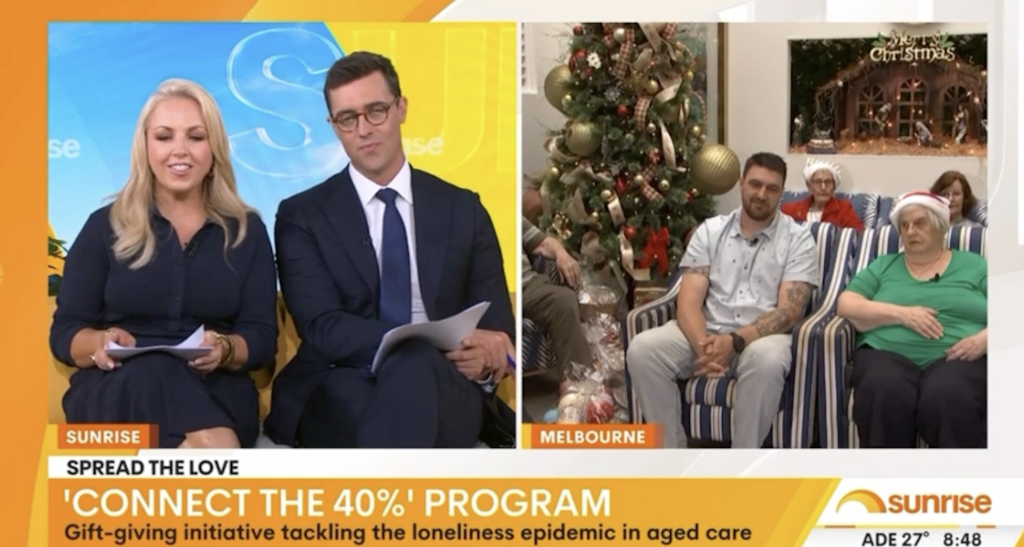
For all the talk of person-centred care, one uncomfortable truth remains largely unresolved across the sector. Up to 40 per cent of older Australians living in residential aged care never receive a single visitor during their stay. It is not a seasonal issue or a soft social concern. It is a structural blind spot with direct consequences for wellbeing, dignity and quality of life.
Connect the 40% was created in response to that gap. The program connects members of the public with older Australians living in aged care who are experiencing isolation, enabling simple acts of generosity to translate into moments of genuine human connection. Through an online platform, donors can view individual profiles and fulfil modest requests, from books and blankets to shared outings and experiences.
What gives the model its strength is its focus on individuality. Each profile reflects a person, not a problem to be solved. The gifts are personal, and their impact often far outweighs their size.
Jakob Neeland, who helps lead the program, says the emotional toll of isolation is particularly visible during the festive season.
“Feelings of isolation and loneliness can fester within aged care homes throughout the year, but these feelings are amplified in the holiday season, with seniors who don’t receive visitors seeing many of their fellow residents receive visits from family and friends,” Neeland says.
The requests themselves are rarely extravagant. That simplicity, Neeland says, is precisely the point.
“Many of the gift requests that we receive are small and humble requests, but it is amazing just how big an impact receiving a gift can have for someone in this position.”
He adds that the benefits extend beyond a single moment of happiness.
“Unfortunately, a lot of loneliness and feelings of isolation are accompanied by a feeling of a loss of self, and a personalised gift that speaks to that person as an individual helps to reinforce their individuality.”
Neeland recently fulfilled a resident’s wish to visit the Dandenong Ranges, sharing a day that included panoramic views and a stop in Sassafras for scones with jam and cream. It is one story among many, but it illustrates the broader point. Connection does not need to be complex to be meaningful.
Pay it forward this Christmas
Those wanting to make a direct difference can pay forward a gift or experience to a lonely older Australian this Christmas through Connect the 40%. Each contribution supports a real person and a moment of genuine connection.Visit www.connectthe40.com to take part.


