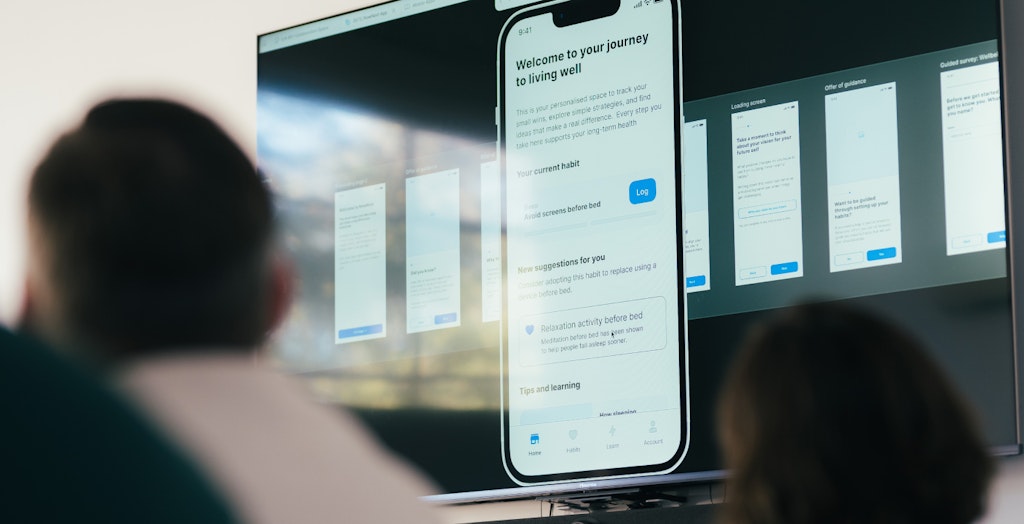
A new Australian wellbeing app is taking a different approach to behaviour change: start smaller, remove the pressure, and design for real life.
The app, called NowNext, has been developed by Independent Living Assessment (iLA) with design partner Anthologie and technology partner Zyrous. It is aimed at Australians aged 45–65, a life stage where health habits begin to matter more, but time and energy are often in short supply.
Rather than promising dramatic transformations, the free app focuses on something much simpler: helping people build small, sustainable habits that support long-term health, independence and wellbeing.
It may sound modest. But in the context of Australia’s ageing population and rising pressure on health and care systems, small changes made earlier in life can have a significant long-term impact.
The problem most wellbeing apps ignore
Most digital wellbeing tools assume users are already motivated.
They expect people to have spare time, strong discipline and the mental space to overhaul their lifestyle. For many Australians in midlife, that assumption falls apart quickly.
This stage of life often includes demanding jobs, financial pressure, ageing parents, teenage children and emerging health concerns. People may know what they should be doing, but translating good intentions into consistent action can be difficult.
Research conducted during the development of NowNext highlighted what behavioural scientists call the “intention–action gap.”
Participants broadly understood the importance of sleep, exercise, nutrition and social connection. But competing responsibilities meant those goals rarely translated into sustained habits.
Traditional health messaging, researchers found, can also backfire. Messaging that feels judgemental, overly clinical or focused on ageing risks disengaging the very people it aims to help.
Designing for behaviour change, not perfection
Instead of pushing ambitious goals, NowNext was built around a different idea: help people start small and build momentum.
Users can choose habits across several wellbeing areas including physical health, sleep, nutrition, mental wellbeing, brain health and social connection.
The app allows users to either follow guided recommendations or create their own pathway, reflecting the reality that there is no single route to better wellbeing.
Several design principles shaped the experience:
- Small, achievable actions that feel realistic within busy lives
- Flexible goal setting so habits can adapt as circumstances change
- Situational prompts encouraging people to plan when and where they will act
- Supportive language that avoids alarmist messaging about ageing
The intention is to reinforce consistency rather than perfection.
“Behaviour change doesn’t happen through willpower alone,” said Anthologie Managing Director Amy Sutton.
“It happens when the next step feels doable. Our role was to translate lived experience and behavioural evidence into a practical, low-pressure experience that fits into real life.”
Tested with real users
Ahead of launch, the app was trialled over five weeks with around 100 Australians aged 45–65.
Participants completed surveys before, during and after the trial, while their in-app engagement was also tracked.
Results were encouraging.
Wellbeing measures improved across the trial period, and around 90 per cent of participants reported the app was easy to use, often describing it as motivating and supportive.
Feedback from users also helped identify opportunities for improvement, including clearer progress tracking and more flexible scheduling features.
Why early intervention matters
For policymakers and health leaders, initiatives like NowNext highlight a growing shift towards preventative wellbeing.
Midlife represents a critical window where everyday behaviours can influence later health outcomes, including physical mobility, cognitive function and independence.
Supporting people to adopt sustainable habits earlier may help reduce future demand on health and aged care systems.
That is part of the thinking behind the project for iLA, which has long focused on supporting Australians to maintain independence and wellbeing.
NowNext continues that approach, offering the app free of charge, with no advertising or hidden costs.
A small step with long-term potential
The idea behind NowNext is intentionally modest.
It does not promise dramatic life overhauls or miracle results. Instead, it acknowledges that life is messy, motivation fluctuates, and change rarely happens in neat, linear progress.
But small actions, repeated consistently, can compound over time.
If that sounds obvious, it is because it is. The surprising part is how rarely digital health products are designed with that reality in mind.


